Saturn V Rocket History – The Giant That Took Humans to the Moon
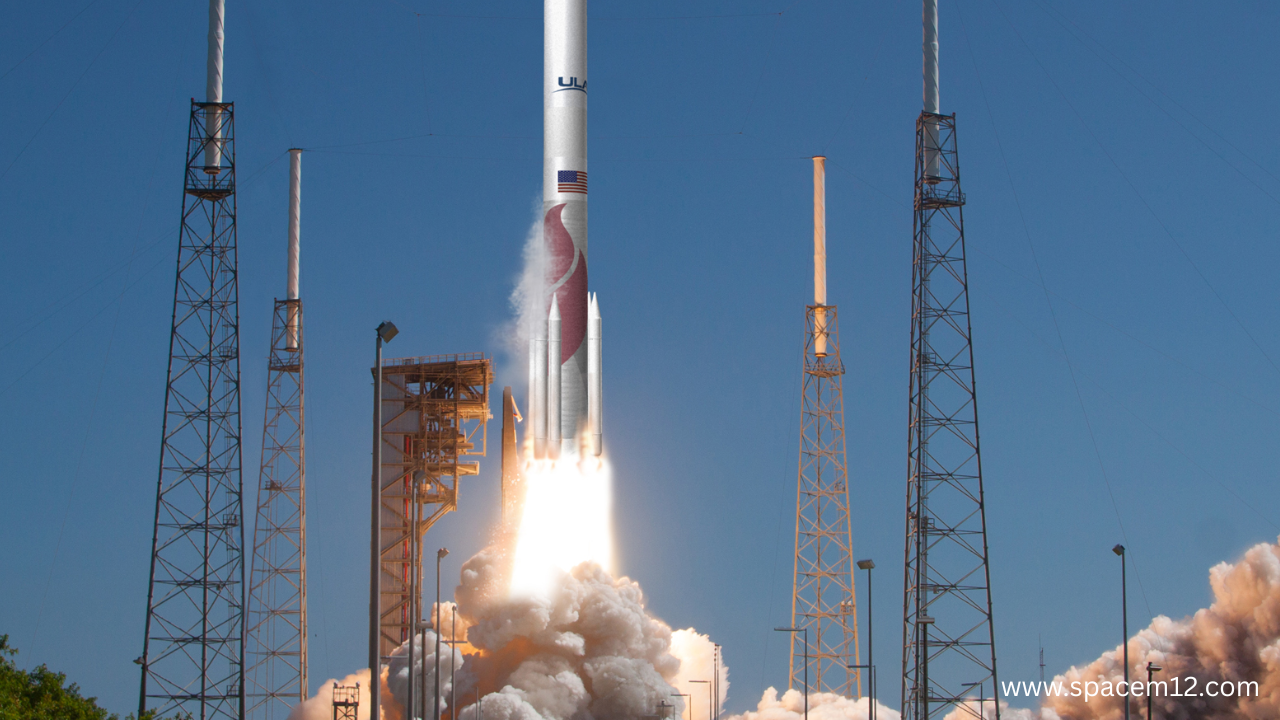
The Saturn V rocket was more than just a machine—it was a symbol of what humankind can achieve when passion meets engineering. Built by NASA during the 1960s, this rocket carried astronauts beyond Earth and helped the world witness the first steps on the Moon.
From 1969 to 1972, it launched every crewed Apollo mission that landed on the Moon, including the famous Apollo 11. Even today, no rocket has matched its size, power, or flawless record.

The Beginning of a Legend
When President John F. Kennedy promised to land a man on the Moon, engineers at NASA had to design something never seen before. The result was the Saturn V—a 110-meter-tall rocket that weighed about 2.9 million kilograms.
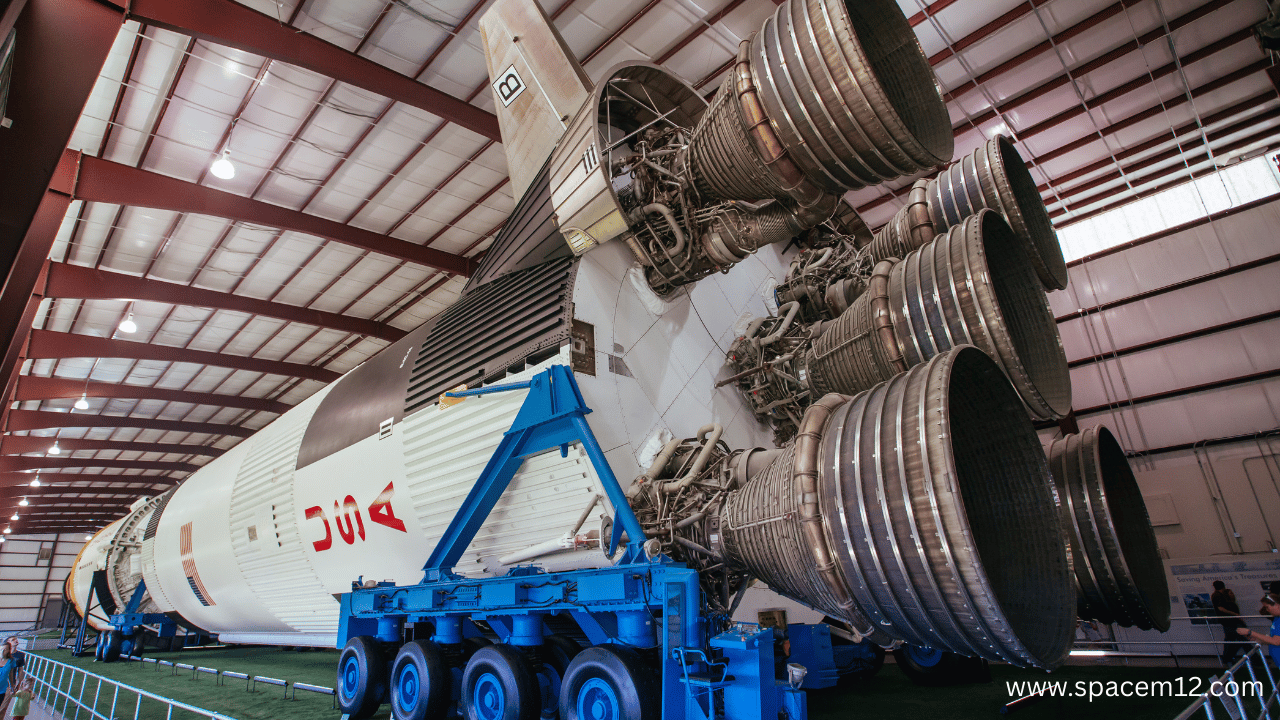
At launch, five enormous F-1 engines on its first stage generated 3.4 million kilograms of thrust, shaking the ground like thunder. To make that happen, each launch required 89 truckloads of liquid oxygen, 28 truckloads of liquid hydrogen, and 27 railcars of kerosene.
The second stage used J-2 engines, smaller but just as efficient. They burned hydrogen and oxygen, making them powerful enough to push the spacecraft into orbit. Finally, the third stage fired a single J-2 engine to send astronauts toward the Moon.
The First Launch – Power That Shook the Earth
On 9 November 1967, the first Saturn V thundered into the sky on the Apollo 4 mission. The sound was so loud that veteran journalist Walter Cronkite had to shout over the noise as his building’s windows shook.
“The building’s shaking,” he said. “We’re holding it with our hands… Oh, the roar is terrific!”
This unmanned test proved that the Saturn V could survive the incredible stress of launch. But later flights, like Apollo 6, faced difficulties—engine vibrations, early shutdowns, and a third stage that refused to restart. Still, NASA learned from each test, improving the rocket for crewed missions.
Power Beyond Imagination
When astronauts rode the Saturn V, they experienced an incredible force. At liftoff, the rocket hit 4.5 Gs—meaning the crew felt more than four times their weight pressing them into their seats.
Once the first stage dropped away, the second stage ignited, throwing them forward again. One astronaut said it felt like “sitting on a giant compressed spring.”
Within 9 minutes, the rocket was traveling 37,300 km/h, faster than any human before. By then, 96 percent of its total weight was gone, burned as fuel.
Even aviation legend Charles Lindbergh was amazed. When he met the Apollo 8 crew, he learned that the Saturn V burned 18,000 kg of fuel every second. “In the first second of your flight,” he told them, “you’ll burn ten times more fuel than I did flying to Paris.”
Case Study: Apollo 11 – The Giant Leap
Perhaps the most famous Saturn V flight was Apollo 11. On 16 July 1969, Neil Armstrong, Buzz Aldrin, and Michael Collins climbed aboard at Kennedy Space Center.
Millions watched live as the rocket lifted from the pad. The sky lit up, windows shook, and the crowd cheered. After 12 minutes, the crew reached Earth orbit. Then, the third stage reignited, sending them toward the Moon.
Four days later, Armstrong stepped onto the lunar surface, declaring, “That’s one small step for man, one giant leap for mankind.”
This single mission proved that the Saturn V was not only powerful but also reliable. It fulfilled Kennedy’s dream and united the world in awe.
Challenges and Close Calls
Although the Saturn V was a masterpiece, it wasn’t perfect.
- Apollo 10 suffered dangerous vibrations known as “pogo oscillations.”
- Apollo 12 was struck by lightning — twice — right after liftoff, turning the rocket into the world’s longest lightning rod.
- Apollo 13 lost one engine mid-flight, though the remaining engines saved the mission.
And on its final flight in 1973, when it launched Skylab, vibrations tore off a solar panel and damaged shielding. Still, the mission succeeded thanks to NASA’s quick thinking.
What Made the Saturn V Special?
The Saturn V was designed not only for the Moon. NASA planned for it to:
- Launch space stations like Skylab
- Send astronauts to Venus on 400-day flyby missions
- Deploy heavy robotic spacecraft to Mars and beyond
- Possibly even launch the early Space Shuttle design
Sadly, these plans never came true. Each launch cost about $1.26 billion in today’s money, and during the 1970s, the U.S. faced other priorities—Vietnam, healthcare, education, and social reform.
Funding dried up, and production stopped after only fifteen rockets.
The Saturn V’s Final Years
Out of those fifteen:
- Nine carried astronauts to the Moon.
- Three tested Apollo systems in low-Earth orbit.
- One launched Skylab.
- Two were never used and now rest in museums.
Today, you can see these giants:
- At Johnson Space Center in Houston, Texas
- At the Kennedy Space Center near Cape Canaveral, Florida
- At the U.S. Space and Rocket Center in Huntsville, Alabama
These preserved rockets remind visitors how far we’ve come—and how much potential still lies ahead.
The Human Side – Emotion and Awe
Everyone who witnessed a Saturn V launch remembers the feeling. The ground trembled, windows rattled, and even 5 km away, people felt the vibration in their chests.
During Apollo 14, astronaut Alan Shepard’s wife clung to a fence as the sky turned white-hot. Belgian Queen Fabiola covered her ears; King Hussein of Jordan flinched.
Astronaut Mike Collins called the rocket “a gentleman.” Gene Cernan said it was “absolutely scary.” Buzz Aldrin remembered the deep thunder that shook his soul.
No wonder the Saturn V became a legend—it wasn’t just power; it was poetry written in fire.
A Comparison with Other Rockets
| Rocket | Height | Payload to LEO | Lift-off Thrust | Notable Fact |
|---|---|---|---|---|
| Space Shuttle | 56.1 m | 27,500 kg | 3.5 million kg | 135 flights (1981-2011) |
| Falcon Heavy | 70 m | 63,800 kg | 2.3 million kg | Reusable boosters |
| N-1 (Soviet) | 105 m | 95,000 kg | 4.6 million kg | All four flights failed |
| SLS (NASA) | 98 m | 130,000 kg | 4.2 million kg | First flight planned for Artemis missions |
| Saturn V | 110.6 m | 118,000 kg | 3.4 million kg | 13 flights (1967-1973) |
Even modern rockets struggle to surpass its reliability. More than 50 years later, engineers still study the Saturn V’s design for inspiration.
Why Did the Saturn V Disappear?
After Apollo 17 in 1972, public interest faded. People asked why the U.S. should keep spending billions on Moon missions when there were problems at home.
NASA redirected funds toward reusable spacecraft like the Space Shuttle, hoping to make space travel cheaper.
Yet many experts believe if Saturn V production had continued, projects like the International Space Station could have been built much earlier—and with fewer launches.
A Glimpse at What Could Have Been
Imagine if the Saturn V had continued flying: we might have seen astronauts orbit Venus, robotic explorers reach Mars decades earlier, and huge space stations assembled in only a few launches.
But even without those missions, its legacy endures. The new Artemis program and Space Launch System (SLS) owe their design to the Saturn V’s success.
The dream that once took us to the Moon still guides our future journey to Mars.
Question & Answer Section
Q1: Why was the Saturn V rocket so powerful?
Because it used five F-1 engines, each producing more thrust than any other single engine ever built. Together they created 3.4 million kg of thrust.
Q2: How tall was the Saturn V?
It stood 110.6 meters tall, about the height of a 36-story building.
Q3: How many times did the Saturn V fly?
It flew 13 times from 1967 to 1973—every flight a success.
Q4: Where can we see a real Saturn V today?
You can visit preserved rockets at NASA centers in Florida, Texas, and Alabama (see details here ← dofollow link example).
Q5: What replaced the Saturn V?
The Space Shuttle replaced it in 1981, followed by the modern SLS, which continues the dream of returning humans to the Moon.
Conclusion
The Saturn V rocket remains one of humanity’s greatest achievements. It didn’t just take us to the Moon—it showed what determination, teamwork, and imagination could achieve.
Its flame lit up the night sky and inspired generations of engineers, dreamers, and explorers. Even today, as new rockets prepare to return us to the Moon, the Saturn V’s legacy stands tall—a reminder that when we aim high, we can reach beyond the stars.

Muzamil
My name is Muzamil, and I am the founder of Spacem12 — a space exploration platform born out of a lifelong fascination with the cosmos. Like many who look up at the night sky and feel something stir, my passion for space began not in a classroom or a laboratory, but simply through curiosity. As a dedicated hobbyist, I found myself spending countless hours reading about rocket launches, distant galaxies, planetary missions, and the extraordinary people who dedicate their lives to exploring the unknown. Over time, I realized that much of the most exciting space content was either too technical for everyday readers or scattered across dozens of different sources. I started Spacem12 to change that — to create a single destination where anyone, regardless of their background, can explore the wonders of the universe in a clear, engaging, and accurate way. Spacem12 is built on the belief that space belongs to everyone. Whether you're a student discovering astronomy for the first time, a curious mind following the latest missions, or a fellow enthusiast who simply can't stop watching rocket launches — this site is for you. The universe is vast. The journey is just beginning.
View all posts