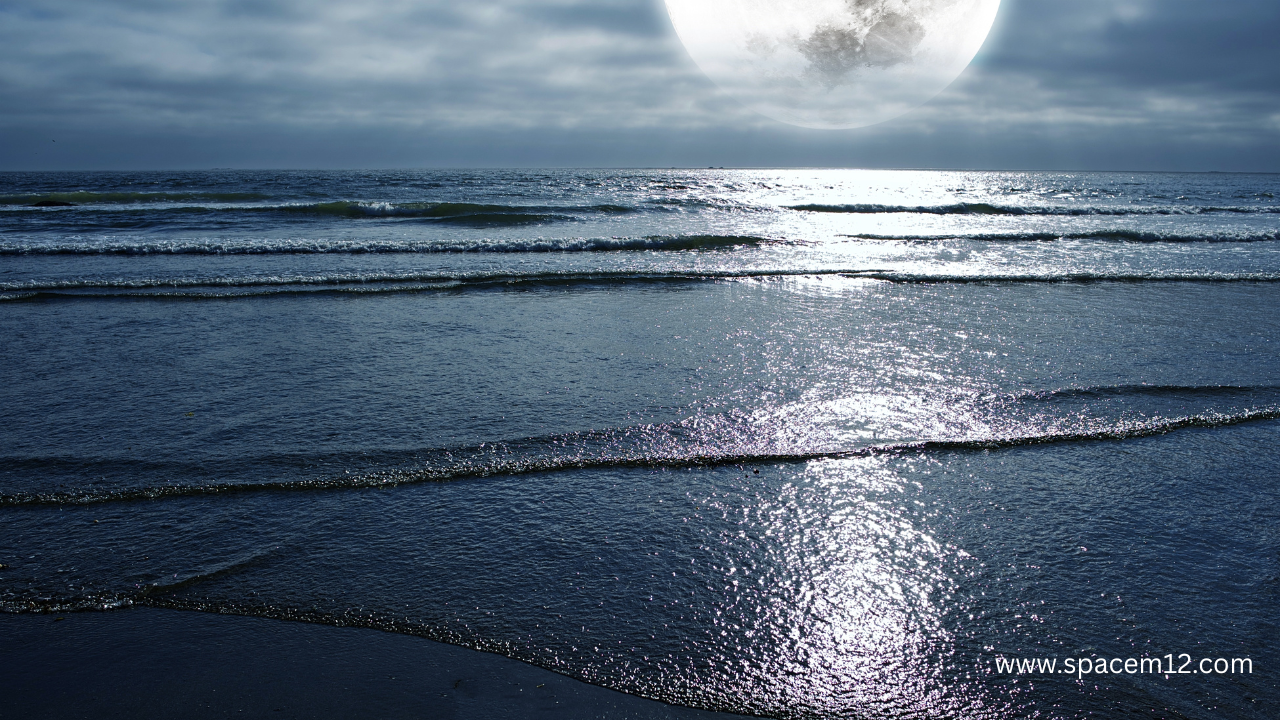
Introduction to Lunar Eclipses
What Causes Lunar Eclipses? A lunar eclipse happens when the Earth moves directly between the Sun and the Moon, blocking sunlight and casting a shadow on the Moon’s surface. This can only occur during a full moon and when the Sun, Earth, and Moon align perfectly. The Moon moves through Earth’s shadow, which creates different types of lunar eclipses.
To better understand what causes lunar eclipses, remember:
-
Alignment must occur in a straight line (syzygy)
-
The Moon passes through Earth’s umbra or penumbra
-
Eclipses don’t happen monthly due to the Moon’s orbital inclination

The Role of the Earth, Moon, and Sun
The Earth, Moon, and Sun each play a critical role in causing a lunar eclipse. This event occurs when the Earth moves between the Sun and the Moon, blocking sunlight. The Moon passes into Earth’s shadow, either partially or completely. This alignment only happens during a full moon phase, which is key to any type of lunar eclipse.
The Moon’s orbit is tilted about 5 degrees relative to Earth’s orbital plane. Because of this, the Moon usually passes above or below Earth’s shadow. But when the alignment is exact, a lunar eclipse forms. The Sun, Earth, and Moon must align in a straight line—a condition known as syzygy—for an eclipse to occur.
Earth’s shadow consists of two main parts: the umbra (darkest shadow) and the penumbra (lighter outer shadow). If the Moon enters the umbra, we see a total lunar eclipse. If only a part of the Moon enters, it’s a partial eclipse. When it passes through the penumbra, a penumbral eclipse occurs—dimmer and harder to see.
Helpful points for understanding:
-
Earth blocks the Sun’s light from reaching the Moon
-
Lunar eclipses only happen during a full moon
-
The alignment of Sun, Earth, and Moon is essential
-
Earth’s umbra and penumbra define eclipse types
Conditions Required for a Lunar Eclipse
A lunar eclipse only happens under specific astronomical conditions. First, the Moon must be in its full moon phase, directly opposite the Sun. This positioning allows Earth to cast a shadow across the Moon. Without a full moon, a lunar eclipse is not possible, making lunar phase a critical factor.
Second, the Sun, Earth, and Moon must align in a straight line, a condition known as syzygy. This alignment allows the Earth’s shadow to fall on the Moon. If this alignment is slightly off, the Moon may only pass through Earth’s penumbra or miss the shadow entirely. Orbital alignment is essential for any eclipse event.
Another key condition is the Moon’s orbital tilt, which is about 5 degrees to Earth’s orbital plane (the ecliptic). Because of this tilt, lunar eclipses do not occur every month. They happen only when the Moon is near a lunar node, the point where its orbit crosses Earth’s orbit.
Key points for users:
-
Must occur during a full moon phase
-
Requires perfect alignment of Sun, Earth, and Moon
-
Happens near a lunar node in the Moon’s orbit
-
Influenced by the Moon’s orbital inclination
Types of Lunar Eclipses
There are three main types of lunar eclipses, each depending on how the Moon moves through Earth’s shadow. The Earth’s shadow has two parts: the umbra (dark center) and the penumbra (outer light shadow). The way the Moon interacts with these shadows defines the eclipse type.
A total lunar eclipse happens when the entire Moon enters the umbra, blocking direct sunlight. The Moon often appears reddish due to light bending through Earth’s atmosphere. This is commonly called a blood moon, making it one of the most dramatic eclipse types.
In a partial lunar eclipse, only a part of the Moon enters the umbra. This causes a visible dark shadow to cover a section of the Moon. It’s easy to see with the naked eye and lasts for several hours depending on the alignment.
A penumbral lunar eclipse occurs when the Moon passes through the penumbra only, making a subtle dimming effect. These eclipses are harder to notice without instruments.
Key points:
-
Total: Full entry into umbra
-
Partial: Partially in umbra
-
Penumbral: Only in penumbra
Why Lunar Eclipses Don’t Happen Every Month
Lunar eclipses don’t happen every month, even though the Moon completes one orbit around Earth every 27 days. This is because the Moon’s orbit is tilted about 5 degrees compared to Earth’s orbit around the Sun. That tilt prevents perfect alignment most of the time.
For a lunar eclipse to occur, the Sun, Earth, and Moon must align precisely in a straight line. This only happens when the full moon is near one of the two lunar nodes—points where the Moon’s orbit crosses Earth’s orbital plane. Without this alignment, the Moon misses Earth’s shadow.
These lunar nodes shift slightly over time due to gravitational forces, creating what’s known as eclipse seasons. These seasons occur about every six months and last a few weeks. During this time, the chances of a solar or lunar eclipse increase.
Key reasons lunar eclipses aren’t monthly:
-
Moon’s orbit is tilted (not flat)
-
Alignment happens only near lunar nodes
-
Eclipses occur during specific eclipse seasons
-
Earth’s shadow must line up with the Moon’s path
Frequency and Predictability
Lunar eclipses are not rare, but they don’t occur every month. On average, the frequency of lunar eclipses is two to four times per year. This depends on the Moon’s orbit, the alignment with Earth’s shadow, and the timing of eclipse seasons.
Astronomers can predict lunar eclipses accurately using mathematical models and orbital patterns. The Saros cycle, lasting about 18 years, helps track and forecast future eclipses. This cycle uses past eclipse data to predict when and where future events will occur.
Eclipse predictability is possible because of the stable motion of the Moon and Earth. Once patterns are known, scientists can forecast partial, total, or penumbral eclipses decades in advance. This helps in planning scientific observations and public viewing events.
Key facts about frequency and prediction:
-
2–4 lunar eclipses occur each year
-
Eclipse seasons repeat every 6 months
-
The Saros cycle helps in accurate prediction
-
Moon’s orbit and timing make forecasts reliable
Cultural and Scientific Significance
Lunar eclipses have held cultural significance for centuries. Many ancient civilizations saw them as important omens or spiritual events. They often symbolized change, mystery, or messages from the gods. These cultural beliefs influenced early astronomy and mythology around the world.
Scientifically, lunar eclipses help researchers study Earth’s atmosphere. The reddish color during a total eclipse is caused by sunlight bending through Earth’s atmosphere, revealing information about its composition. This makes lunar eclipses valuable for atmospheric and astronomical research.
Lunar eclipses also assist scientists in understanding the Earth-Moon-Sun system and orbital mechanics. Observing eclipses improves predictions of celestial movements and helps refine models of gravitational interaction and orbital dynamics.
Key points on significance:
-
Ancient cultures viewed eclipses as spiritual signs
-
Total lunar eclipses reveal Earth’s atmospheric effects
-
Eclipses improve understanding of orbital mechanics
-
Help in public astronomy education and outreach
| Aspect | Explanation |
|---|---|
| Definition | A lunar eclipse occurs when the Earth blocks sunlight from reaching the Moon, casting a shadow. |
| Key Alignment | The Sun, Earth, and Moon must align in a straight line during a full moon (called syzygy). |
| Earth’s Shadow | The Earth’s shadow has two parts: the dark umbra and lighter penumbra that the Moon passes through. |
| Moon’s Orbit Tilt | The Moon’s orbit is tilted about 5° from Earth’s orbit, so eclipses don’t happen every month. |
| Types of Eclipses | Total, partial, and penumbral lunar eclipses depend on how much of the Moon enters Earth’s shadow. |
| Frequency | Lunar eclipses occur 2 to 4 times a year, mostly during eclipse seasons near lunar nodes. |
| Scientific Importance | Eclipses help study Earth’s atmosphere and improve knowledge of celestial mechanics. |
| Cultural Significance | Historically seen as omens or spiritual events across different cultures worldwide. |

Call to Action
Want to learn more about what causes lunar eclipses and explore fascinating astronomy topics? Visit NASA’s Lunar Eclipse Guide for detailed information, eclipse predictions, and expert resources. Start your journey into space science today and never miss the next lunar event!
2025 all moon eclipses
| Date (UTC) | Eclipse Type | Duration | Visibility |
|---|---|---|---|
| March 13–14 | Total Lunar Eclipse | 3 hours 39 minutes | Visible across North America, South America, Europe, Africa, and Oceania |
| September 7–8 | Total Lunar Eclipse | 3 hours 29 minutes | Visible over East Africa, Asia, and Australia |
Case Study: Observing the Total Lunar Eclipse of May 26, 2021
The total lunar eclipse on May 26, 2021, provided a valuable opportunity for both scientists and enthusiasts to study the Earth-Moon-Sun system. During this event, the Moon passed completely through Earth’s umbra, causing a striking red color often called a “blood moon.” This eclipse was visible across parts of Asia, Australia, the Pacific, and the Americas.
Researchers used this eclipse to analyze Earth’s atmospheric composition by studying the light filtering through the atmosphere onto the Moon’s surface. The scattering of sunlight revealed levels of aerosols and pollution, offering insights into environmental conditions.
Amateur astronomers reported clear visibility and used the event for educational outreach, increasing public interest in astronomy. The eclipse also confirmed orbital predictions, showcasing the precision of celestial mechanics and the reliability of eclipse forecasting models.
Key Outcomes:
-
Enhanced understanding of Earth’s atmosphere through eclipse light analysis
-
Confirmed accuracy of lunar eclipse prediction models
-
Increased public engagement with astronomy and science education
FAQS
What is the main cause of a lunar eclipse?
A lunar eclipse happens when the Earth comes between the Sun and the Moon, and Earth’s shadow falls on the Moon. This blocks sunlight from directly reaching the Moon, causing it to darken or change color.
What is the true cause of an eclipse?
The true cause of any eclipse—whether lunar or solar—is the alignment of the Sun, Earth, and Moon in a straight line (called syzygy). For a lunar eclipse, Earth blocks sunlight from reaching the Moon. For a solar eclipse, the Moon blocks sunlight from reaching Earth.
What is the story behind the lunar eclipse?
Throughout history, many cultures created myths to explain lunar eclipses. Some believed the Moon was being swallowed by a creature or spirit, while others saw it as a sign or warning from the gods. Today, we understand it scientifically as a natural event caused by celestial alignment.
What is causing the blood moon?
The blood moon effect occurs during a total lunar eclipse when Earth’s atmosphere bends sunlight and filters out blue light, letting only red and orange wavelengths reach the Moon. This causes the Moon to glow with a reddish color.
Conclusion
Lunar eclipses are fascinating celestial events caused by the Earth blocking sunlight from reaching the Moon. This natural phenomenon depends on the precise alignment of the Sun, Earth, and Moon during a full moon. Understanding this alignment helps explain why lunar eclipses occur and their different types, like total, partial, and penumbral eclipses.
The Moon’s orbital tilt is a key reason why lunar eclipses don’t happen every month. Only when the Moon is near the lunar nodes during the full moon phase can the Earth’s shadow fall on it. This explains the timing and rarity of these events and highlights the importance of orbital mechanics in predicting eclipses.
Lunar eclipses have deep cultural and scientific significance. Historically, many civilizations interpreted eclipses as omens. Today, scientists use eclipses to study Earth’s atmosphere and improve our knowledge of astronomical patterns. These events also inspire public interest in space science and help refine celestial models.

Muzamil
My name is Muzamil, and I am the founder of Spacem12 — a space exploration platform born out of a lifelong fascination with the cosmos. Like many who look up at the night sky and feel something stir, my passion for space began not in a classroom or a laboratory, but simply through curiosity. As a dedicated hobbyist, I found myself spending countless hours reading about rocket launches, distant galaxies, planetary missions, and the extraordinary people who dedicate their lives to exploring the unknown. Over time, I realized that much of the most exciting space content was either too technical for everyday readers or scattered across dozens of different sources. I started Spacem12 to change that — to create a single destination where anyone, regardless of their background, can explore the wonders of the universe in a clear, engaging, and accurate way. Spacem12 is built on the belief that space belongs to everyone. Whether you're a student discovering astronomy for the first time, a curious mind following the latest missions, or a fellow enthusiast who simply can't stop watching rocket launches — this site is for you. The universe is vast. The journey is just beginning.
View all posts