Introduction
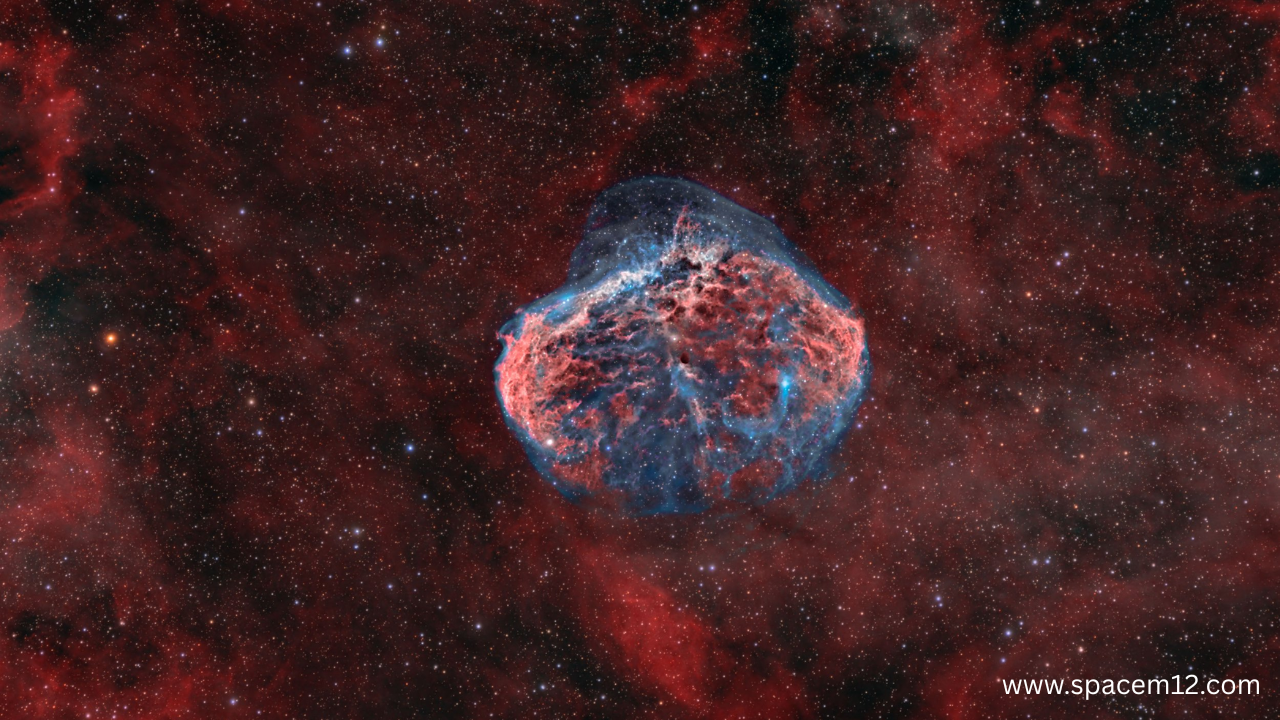
The Crescent Nebula, a stunning cosmic formation located in the constellation Cygnus, has fascinated astronomers since its discovery. Known for its delicate arc of glowing gases, the Crescent Nebula offers a glimpse into the complex processes that occur as massive stars evolve and eventually die. This nebula, formed by the powerful stellar winds of the Wolf-Rayet star WR 136, serves as a key piece in the puzzle of understanding stellar life cycles. Through its unique structure and composition, the Crescent Nebula provides valuable insights into the life and death of stars, making it a significant object of study in the field of astronomy.

Formation and Structure
How the Crescent Nebula Was Formed
The Crescent Nebula was shaped through the sensational connections between an enormous star and its general climate. At the core of this cloud lies WR 136, a Wolf-Rayet star that has gone through extraordinary heavenly development. The Bow Cloud was made when strong heavenly breezes from WR 136 crashed into the more slow moving external layers of material that the star had recently shed. This crash made the material pack and intensity up, bringing about the development of the gleaming circular segment of gas and residue that we presently see as the Bow Cloud. The complicated construction of the cloud is a demonstration of the dynamic and rough cycles that shape the existence patterns of stars.
Physical Characteristics of the Crescent Nebula99xc
The Crescent Nebula is a striking heavenly item described by its special shape and brilliant appearance. Traversing roughly 25 light-years across, this cloud is situated around 5,000 light-years from Earth in the star grouping Cygnus. Its particular sickle shape is framed by a shell of ionized gas, gleaming brilliantly as it is stimulated by the serious radiation from the focal Wolf-Rayet star, WR 136. The cloud’s complicated construction incorporates both discharge and reflection parts, with the focal district showing a splendid, tempestuous appearance encompassed by fainter, more diffuse material. These actual qualities make the Sickle Cloud a captivating subject for both expert cosmologists and beginner stargazers the same.
The Central Star: WR 136
At the center of the Crescent Nebula lies WR 136, a Wolf-Rayet star that assumes a significant part in the development and presence of the cloud. Wolf-Rayet stars like WR 136 are uncommon, huge stars that have arrived at a high level phase of heavenly advancement. These stars are known for their strong heavenly breezes, which discharge a lot of material into space at high paces.
WR 136 is no exemption, having shed its external layers after some time, which then, at that point, crashed into the encompassing interstellar medium to make the gleaming curve of the Sickle Cloud. The serious radiation from WR 136 proceeds to shape and enlighten the cloud, making it a dynamic and developing construction. This focal star isn’t just the main impetus behind the Sickle Cloud’s development yet additionally a vital object of study for cosmologists trying to comprehend the existence patterns of gigantic stars.
The Science Behind the Nebula
The Composition of the Crescent Nebula
The Crescent Nebula, with its particular curve and gleaming appearance, is made out of different gases and components that recount the account of its vicious starting points and progressing advancement. At the core of the cloud is WR 136, a gigantic Wolf-Rayet star that has removed huge measures of material over the long haul. The actual cloud is essentially made out of ionized hydrogen (H II), which gives it the trademark red shine seen in many pictures. This ionization happens as the extraordinary bright radiation from WR 136 stimulates the encompassing hydrogen gas, making it produce light.
Notwithstanding hydrogen, the Crescent Nebula contains different components like helium, oxygen, nitrogen, and sulfur. These components are likewise ionized by the radiation from WR 136, adding to the cloud’s rich and differed variety range. For instance, ionized oxygen (O III) transmits a pale blue approval, while ionized nitrogen (N II) and sulfur (S II) add shades of red and orange. This bright presentation isn’t just outwardly striking yet in addition furnishes cosmologists with significant hints about the cycles happening inside the cloud.
The Crescent Nebula likewise contains dust, which assumes a vital part in its design and appearance. Dust grains, made out of silicates, carbon, and different components, disperse and assimilate light, making hazier locales and upgrading the difference between the brilliant circular segments and the encompassing space. This transaction of light and shadow adds profundity to the cloud’s appearance, making it a most loved focus for astrophotographers.
Generally, the creation of the Sickle Cloud is a complicated blend of gases and residue, formed by the strong powers at work inside and around WR 136. This organization characterizes the cloud’s appearance as well as offers significant experiences into the existence patterns of enormous stars and the cycles that oversee the advancement of such heavenly items.
How Astronomers Study the Crescent Nebula
Cosmologists utilize various refined apparatuses and procedures to concentrate on the Crescent Nebula, disentangling secrets and acquiring experiences into the cycles shape such infinite peculiarities. One of the essential strategies used to notice the Sickle Cloud is spectroscopy, a method that breaks down the light transmitted or consumed by the cloud to decide its substance sythesis, temperature, thickness, and movement. By inspecting the ghostly lines of the cloud’s light, stargazers can recognize the particular components present, like hydrogen, oxygen, and nitrogen, and figure out how these components are disseminated all through the cloud.
Notwithstanding spectroscopy, cosmologists depend on imaging from ground-based telescopes and space-based observatories to catch itemized perspectives on the Bow Cloud. Ground-based telescopes, furnished with cutting edge cameras and channels, can seclude explicit frequencies of light, permitting space experts to concentrate on various parts of the cloud exhaustively. In any case, Earth’s air can twist these perceptions, so space telescopes like the Hubble Space Telescope are pivotal for getting high-goal pictures liberated from climatic impedance. Hubble’s perceptions have given the absolute most definite pictures of the Bow Cloud, uncovering its perplexing construction and the powerful collaborations between the star WR 136 and its encompassing material.
Also, radio telescopes are utilized to concentrate on the cooler, dustier districts of the Bow Cloud that discharge radio waves. These perceptions assist cosmologists with grasping the circulation and properties of the residue inside the cloud, supplementing the information got from optical and infrared perceptions. Consolidating information from numerous frequencies permits space experts to build a far reaching image of the cloud, from its hot, ionized districts to its cooler, dust-loaded regions.
Through these techniques, space experts keep on concentrating on the Bow Cloud, uncovering new insights regarding its development, advancement, and the existence pattern of its focal star, WR 136. This multi-layered approach not just improves how we might interpret the Crescent Nebula yet in addition adds to more extensive information about heavenly advancement and the elements of nebulae.
The Importance of the Crescent Nebula in Stellar Evolution
The Crescent Nebula holds a huge spot in the investigation of heavenly development, filling in as a perfect representation of the complicated cycles that enormous stars go through as they approach the finish of their life cycles. At the core of the Sickle Cloud is WR 136, a Wolf-Rayet star that addresses a late stage in the development of a gigantic star. Wolf-Rayet stars are described by their strong heavenly breezes, which oust a lot of material into space at high speeds. These breezes assume a pivotal part in the development of the Sickle Cloud, as they crash into recently catapulted material, making the cloud’s unmistakable gleaming bend.
Concentrating on the Crescent Nebula permits stargazers to notice these cycles progressively, giving important bits of knowledge into the existence patterns of enormous stars. The cloud fills in as a depiction of the temporary stage between a gigantic star’s principal succession and its possible destiny, whether it be a cosmic explosion or the development of a neutron star or dark opening. By examining the creation, construction, and elements of the Sickle Cloud, researchers can more readily comprehend how gigantic stars lose their external layers and how these layers connect with the encompassing interstellar medium.
Besides, the Crescent Nebula offers a remarkable chance to concentrate on the impacts of heavenly breezes and radiation on the general climate. The extreme radiation from WR 136 ionizes the gases inside the cloud, making them produce light and making the cloud’s trademark shine. This association between the star and its cloud gives pieces of information about how comparable cycles could shape different districts of the universe, including star-framing areas and the interstellar medium.
Generally, the Crescent Nebula isn’t simply an outwardly staggering item yet in addition a crucial research center for concentrating on the complex subtleties of heavenly development. Its continuous change offers a brief look into the strong powers that oversee the life and passing of monstrous stars, adding to our more extensive comprehension of the universe.
Observing the Crescent Nebula
Best Practices for Amateur Astronomers
For novice space experts, noticing the Crescent Nebula can be a compensating experience, offering a brief look into the excellence and intricacy of our universe. To take full advantage of your stargazing meetings, fundamental to follow a few prescribed procedures will upgrade your perception and guarantee you catch the cloud’s complicated subtleties.
1. Pick the Perfect Opportunity and Location
The Crescent Nebula is situated in the star grouping Cygnus, best saw during the pre-fall and late-summer when Cygnus is high overhead. The best chance to notice the cloud is during another moon or when the moon is beneath the skyline, as the shortfall of evening glow lessens light contamination and further develops perceivability. Choosing a dull sky area away from city lights is critical for seeing the cloud’s weak subtleties. Light contamination can fundamentally reduce the perceivability of profound sky objects like the Sickle Cloud, so finding a provincial or distant region will significantly improve your perception experience.
2. Utilize Suitable Equipment
The Crescent Nebula is a moderately weak article, so it is crucial for utilize the right gear. A telescope with basically a 8-inch gap is prescribed to determine the cloud’s subtleties. For those new to telescopes, a Dobsonian reflector or a Schmidt-Cassegrain telescope are great choices for profound sky perceptions. Moreover, utilizing an O-III channel, which impedes most frequencies of light with the exception of the oxygen-III emanation lines, can altogether improve the differentiation and perceivability of the cloud against the foundation sky. This channel is especially compelling in featuring the cloud’s weak, sparkling curves.
3. Persistence and Practice
Profound sky noticing requires persistence and practice. Begin with a low amplification to find the Sickle Cloud, then, at that point, steadily increment the amplification to investigate its better subtleties. Take as much time as necessary to allow your eyes to change in accordance with the dimness, as this will work on your capacity to see faint items. Utilize deflected vision, a procedure where you look marginally to the side of the item as opposed to straightforwardly at it, to identify faint subtleties that probably won’t be noticeable with direct vision.
4. Astrophotography
For those intrigued by astrophotography, the Crescent Nebula offers a difficult yet remunerating subject. A long-openness arrangement with a following mount is important to catch the cloud’s weak subtleties. Joining different openings through picture stacking can assist with drawing out the unpretentious designs and shades of the cloud. Utilizing narrowband channels like H-alpha and O-III will disengage explicit frequencies of light produced by the cloud, permitting you to catch its full magnificence.
5. Recording and Sharing Observations
Keeping a logbook of your perceptions, including insights concerning the date, time, area, and hardware utilized, can assist with keeping tabs on your development and work on future perceptions. Offering your discoveries and pictures to neighborhood cosmology clubs or online networks can likewise give significant input and motivate others to investigate the night sky.
By following these prescribed procedures, novice space experts can improve their experience and foster a more profound appreciation for the marvels of the universe, with the Sickle Cloud filling in as an entryway to the entrancing universe of profound sky perception.
Photographing the Crescent Nebula
Shooting the Crescent Nebula is a remunerating try for astrophotographers, offering an opportunity to catch one of the sky’s most multifaceted and delightful profound sky objects. Notwithstanding, because of its faintness and complex construction, capturing the Crescent Nebula requires cautious preparation, the right gear, and a strong comprehension of astrophotography procedures.
Regardless, a telescope with a medium to huge opening — ideally 8 inches or more — is fundamental for catching the fine subtleties of the cloud. Matching your telescope with an excellent tropical mount that tracks the development of the stars is pivotal, as this will permit you to take long openings without the stars showing up as trails in your pictures. A DSLR or devoted cosmology camera connected to the telescope can be utilized to catch the light from the cloud, with longer openness times important to draw out its weak highlights.
Utilizing narrowband channels, like H-alpha and O-III, is especially compelling while capturing the Sickle Cloud. These channels disengage explicit frequencies of light, featuring the cloud’s ionized gases and upgrading contrast. The H-alpha channel catches the red shine of ionized hydrogen, while the O-III channel underscores the blue-green light radiated by doubly ionized oxygen. By taking various openings through these channels and stacking the pictures in post-handling, you can make a composite picture that uncovers the full profundity and intricacy of the cloud.
Persistence and scrupulousness are key while capturing the Crescent Nebula. Because of its faintness, it frequently requires long stretches of absolute openness time to catch adequate detail. Cautious post-handling is additionally vital for balance the tones, decrease clamor, and draw out the unobtrusive designs inside the cloud. Strategies, for example, picture stacking, sound decrease, and difference improvement will help in delivering a last picture that really features the excellence of the Bow Cloud.
Shooting the Sickle Cloud gives a staggering visual record as well as develops your comprehension and enthusiasm for the unpredictable cycles at play in our universe, making it an essential and instructive experience for any astrophotographer.
The Crescent Nebula in Popular Culture
Depictions of the Crescent Nebula in Media
The Crescent Nebula has caught the creative mind of craftsmen, producers, and science devotees the same, showing up in different types of media. Its striking shape and energetic varieties make it a famous subject for both logical outlines and imaginative portrayals. In the domain of mainstream society, the Sickle Cloud frequently shows up in space-themed visual media, including sci-fi films, TV programs, and PC illustrations. Its particular sickle shape and brilliant gleam loan themselves well to emotional and outwardly staggering portrayals, frequently addressing far off or outsider star frameworks.
One of the most unmistakable models is its utilization in advanced fine art and planetarium projections, where the cloud is displayed in high-goal pictures that feature its multifaceted subtleties. These portrayals are habitually used to show narratives and instructive projects about space science, assisting with carrying the magnificence of the cloud to a more extensive crowd. The cloud’s portrayal in such media fills in as an instructive device as well as a wellspring of motivation for the public’s advantage in space and science.
In sci-fi, the Crescent Nebula is some of the time highlighted as a component of the scenery for interstellar experiences or as an area in modern space dramas. Its sensational and outwardly enrapturing appearance causes it a fitting component for scenes that to require a powerful or stunning setting. Albeit these depictions are in many cases more adapted or creative, they help to promote and romanticize the cloud, starting interest and marvel about the genuine cosmic peculiarities.
Moreover, the Crescent Nebula has enlivened specialists to make outwardly shocking pieces that mix logical precision with imaginative innovativeness. These fine arts frequently catch the cloud’s gleaming circular segments and mind boggling subtleties, giving both a logical and stylish enthusiasm for the grandiose construction. Through these different portrayals, the Bow Cloud keeps on dazzling the public’s creative mind and add to our aggregate interest with the universe.
The Crescent Nebula in Literature
In writing, the Crescent Nebula has propelled a scope of sci-fi and famous science books, frequently filling in as an image of the secrets and marvels of the universe. Its striking appearance and complex construction cause it an optimal subject for creators who to investigate subjects of vast glory and the unexplored world.
In sci-fi, the Crescent Nebula regularly shows up as a scenery or setting for interstellar experiences. Creators utilize its striking symbolism to summon a feeling of miracle and scale, depicting it as a far off, colorful area that characters experience during their processes through space. The cloud’s sensational visual allure is frequently utilized to make airs of stunningness and secret, highlighting the boundlessness and excellence of the universe. For example, in certain books, the Sickle Cloud could act as the site of outsider civic establishments or old ancient rarities, adding layers of interest and profundity to the story.
Famous science writing likewise every now and again references the Crescent Nebula to show the unique cycles of heavenly advancement. In books focused on an overall crowd, it is utilized to make sense of the lifecycle of gigantic stars and the development of nebulae. These references frequently incorporate nitty gritty depictions of the cloud’s design and the job of its focal star, WR 136, in molding the cloud’s appearance. Such works plan to make complex cosmic ideas open and connecting with, involving the Sickle Cloud as a true illustration of the entrancing peculiarities happening in our universe.
By and large, the Crescent Nebula presence in writing mirrors its status as a convincing image of grandiose magnificence and logical interest. Whether in the creative domains of sci-fi or the educational pages of famous science books, it keeps on catching the human creative mind and rouse interest known to man.

Related Nebulae and Astronomical Phenomena
Comparing the Crescent Nebula to Other Nebulae
Contrasting the Crescent Nebula with different nebulae features the two its one of a kind qualities and its likenesses with other heavenly nurseries across the universe. In the same way as other emanation nebulae, the Sickle Cloud is a gleaming haze of gas and residue empowered by the radiation from a close by gigantic star, for this situation, the Wolf-Rayet star WR 136. In any case, its sickle shape separates it from additional ordinarily noticed nebulae.
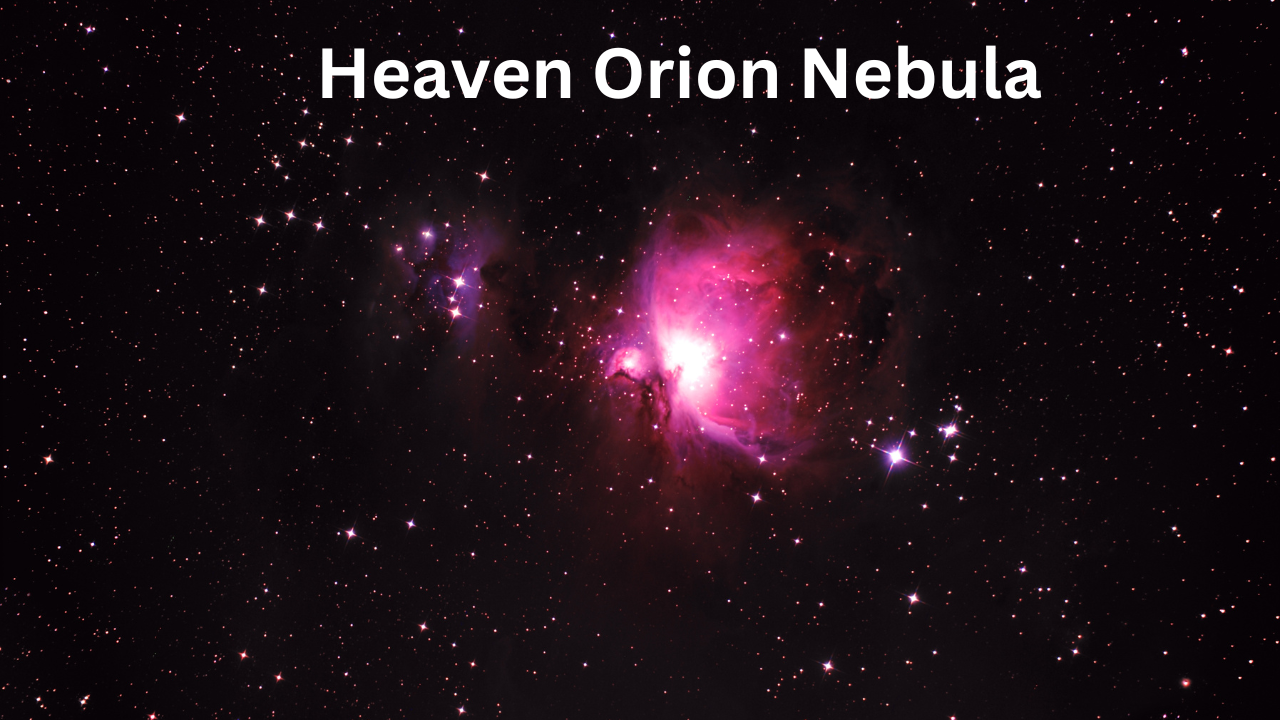
One of the most eminent correlations is with the Orion Cloud, another conspicuous emanation cloud. The Orion Cloud, situated in the Orion heavenly body, is a lot bigger and more productive as far as star development contrasted with the Bow Cloud. It is known for its splendid, broad locale where new stars are conceived, while the Bow Cloud is a remainder of a solitary enormous star’s late life stage. The Orion Cloud is frequently portrayed with a wide, diffuse construction, while the Sickle Cloud’s more restricted, bow like shape mirrors the impacts of the heavenly breeze from WR 136 collaborating with the encompassing material.
The Crescent Nebula gives another intriguing correlation. The Crab Cloud, a cosmic explosion leftover in the heavenly body Taurus, is the consequence of a huge star’s touchy demise. Not at all like the Sickle Cloud, which is as yet framing and developing, the Crab Cloud addresses the result of a heavenly blast, displaying various phases of heavenly advancement. Its complicated filamentary structure appears differently in relation to the Bow Cloud’s more uniform bend of emanation.
Furthermore, the Air pocket Cloud, situated in the heavenly body Cassiopeia, additionally shares likenesses with the Bow Cloud. Both are formed by the breezes from huge stars and show a shell-like construction. Be that as it may, the Air pocket Cloud’s shape is more circular, impacted by the heavenly breeze blowing into an encompassing sub-atomic cloud, while the Bow Cloud’s shape results from the communication of heavenly breezes with recently catapulted material.
These correlations outline how various nebulae, while sharing normal cycles and elements, each have extraordinary qualities formed by their specific heavenly conditions and transformative stages. Understanding these distinctions improves our enthusiasm for the assorted and dynamic nature of nebulae all through the universe.
The Role of Nebulae in the Universe
Nebulae assume a significant part in the universe as both the origin and reusing focuses of stars, driving key cycles that shape the universe. These immense billows of gas and residue are principal to the lifecycle of stars, affecting their arrangement, development, and possible end.
One of the essential jobs of nebulae is to act as heavenly nurseries. Locales inside nebulae, especially those known as sub-atomic mists, are thick with gas and residue, giving the fundamental unrefined components to star arrangement. At the point when these mists breakdown under their own gravity, they piece into more modest clusters that ultimately light atomic combination, bringing forth new stars. This interaction starts the existence pattern of stars as well as adds to the development of planetary frameworks and possibly tenable universes.
As stars advance, they communicate with their encompassing nebulae in critical ways. For instance, enormous stars discharge strong heavenly breezes and radiation that ionize the encompassing gas, making outflow nebulae like the Sickle Cloud. These cooperations shape the nebulae, making them shine splendidly and oust material into space, which can later add to the development of new stars and planets. Consequently, nebulae go about as both a result of heavenly movement and an impetus for ensuing star development.
Furthermore, nebulae assume a crucial part in the reusing of grandiose material. At the point when stars arrive at the finish of their life cycles, particularly in cosmic explosion blasts, they discharge tremendous measures of enhanced material into the encompassing interstellar medium. This material, which incorporates weighty components like carbon, oxygen, and iron, is essential for the arrangement of new stars and planetary frameworks. The remainders of these blasts add to the compound enhancement of the universe, impacting the creation and advancement of people in the future of stars and planets.
In synopsis, nebulae are vital to the cycles of star arrangement, heavenly advancement, and vast reusing. They work with the introduction of new stars, shape the development of existing ones, and add to the improvement of the universe’s compound arrangement. Their dynamic job highlights their significance in the fabulous astronomical pattern of creation and change.
Future Research and Discoveries
Upcoming Missions and Observations
Impending missions and perceptions are set to improve how we might interpret the Crescent Nebula and comparable divine peculiarities, offering new bits of knowledge into heavenly advancement and inestimable cycles. These future undertakings will use state of the art innovation and creative procedures to investigate the cloud more meticulously and across different frequencies of light.
One of the critical missions not too far off is the forthcoming send off of the James Webb Space Telescope (JWST). Booked to give exceptional infrared perceptions, the JWST will permit cosmologists to look through the thick gas and residue of the Sickle Cloud, revealing subtleties that are darkened in apparent light. Its high level instruments, like the Close to Infrared Camera (NIRCam) and the Mid-Infrared Instrument (MIRI), will give point by point pictures and spectra, uncovering the cloud’s inner construction, star arrangement processes, and the associations between heavenly breezes and encompassing material.
Notwithstanding the JWST, the European Space Organization’s (ESA) impending Euclid mission will contribute significant information to how we might interpret inestimable designs. Euclid’s essential objective is to plan the math of the dim universe, yet its perceptions of nebulae like the Bow Cloud will offer experiences into the appropriation of dull matter and the impacts of vast development on nebular designs. This mission will give a more extensive setting to the cloud’s development and advancement inside the bigger system of enormous design.
Ground-based observatories are likewise arranging progressed observational missions. The impending moves up to the Exceptionally Enormous Telescope (VLT) in Chile will incorporate new versatile optics frameworks and high-goal spectrographs, improving the capacity to concentrate on the nitty gritty associations inside nebulae. These updates will permit cosmologists to notice the Bow Cloud with more prominent accuracy, planning its synthetic creation and elements all the more precisely.
These impending missions and perceptions are ready to develop our insight into the Sickle Cloud, offering a more clear image of its part in heavenly advancement and its position in the more extensive enormous scene. By using cutting edge innovation and imaginative observational procedures, researchers will actually want to disentangle the intricate cycles forming this and different nebulae, adding to our general comprehension of the universe.
The Role of AI and Machine Learning in Nebula Research
Man-made brainpower (artificial intelligence) and AI are altering cloud research by giving new instruments and strategies to dissecting tremendous measures of cosmic information, working on the exactness of perceptions, and revealing experiences that were beforehand out of reach. These innovations are progressively coordinated into the investigation of nebulae, offering a few key headways.
One of the essential jobs of artificial intelligence and AI in cloud research is in information handling and examination. Nebulae produce huge amounts of information from telescopes and space observatories, including point by point pictures and spectroscopic information. AI calculations can deal with this information a lot quicker and more precisely than conventional techniques. For example, convolutional brain organizations (CNNs) are utilized to improve picture quality, distinguish inconspicuous highlights inside nebulae, and order various kinds of nebular designs. This permits space experts to distinguish examples and oddities that may be missed by the natural eye.
Artificial intelligence likewise assumes a vital part in computerizing the grouping of nebulae and their parts. Calculations prepared on enormous datasets of realized nebulae can classify groundbreaking perceptions in view of their morphology and outflow qualities. This robotization speeds up the examination cycle, empowering analysts to deal with the rising volume of information from present day telescopes and missions.
Besides, AI models are utilized to recreate and foresee the way of behaving of nebulae in view of actual hypotheses and observational information. These models can recreate the collaboration between heavenly breezes and encompassing gas, foresee the advancement of nebular designs, and test different speculations about star development and nebular elements. By contrasting these reproductions and genuine observational information, researchers can refine their models and gain a more profound comprehension of the cycles overseeing nebulae.
Likewise, computer based intelligence driven instruments are improving the quest for exoplanets and other divine peculiarities inside nebulae. AI calculations can break down light bends and phantom information to distinguish potential exoplanet competitors or recognize strange occasions inside nebular locales. This ability grows the extent of examination and disclosure in nebular examinations.
In general, man-made intelligence and AI are changing cloud research by further developing information examination, mechanizing characterization, and reenacting complex cycles. These innovations are empowering space experts to investigate nebulae with remarkable accuracy and proficiency, prompting new disclosures and a more profound comprehension of these entrancing infinite designs.
Frequently Asked Questions (FAQs)
What is the Crescent Nebula?
The Crescent Nebula is an emission nebula located in the constellation Cygnus, known for its distinctive crescent-shaped appearance. It is illuminated by the radiation from the central Wolf-Rayet star, WR 136, which causes the surrounding gas and dust to emit light.
How was the Crescent Nebula formed?
The Crescent Nebula was formed by the interaction of powerful stellar winds from the Wolf-Rayet star WR 136 with the surrounding material ejected earlier by the star. The collision of these fast-moving winds with the slower, previously expelled gas created the nebula’s characteristic glowing arc.
How far is the Crescent Nebula from Earth?
The Crescent Nebula is approximately 5,000 light-years away from Earth. This distance places it in the distant reaches of our galaxy, making it a challenging but rewarding target for astronomical observation.
What are the main components of the Crescent Nebula?
The Crescent Nebula primarily consists of ionized hydrogen, which gives it its red color. It also contains significant amounts of ionized helium, oxygen, nitrogen, and sulfur, each contributing different colors to the nebula’s overall appearance. Dust within the nebula also plays a role in its structure and visibility.
What equipment is needed to observe the Crescent Nebula?
To observe the Crescent Nebula, amateur astronomers typically use telescopes with at least an 8-inch aperture. Additionally, using an O-III filter can enhance the visibility of the nebula by highlighting the emission lines of doubly ionized oxygen. For astrophotography, a long-exposure setup with a tracking mount is recommended.
Why is the Crescent Nebula important in the study of stellar evolution?
The Crescent Nebula provides insights into the late stages of stellar evolution, particularly for massive stars like WR 136. It helps astronomers understand how stellar winds and radiation shape nebulae and contribute to the lifecycle of stars. Studying the nebula also sheds light on the interactions between stars and their surrounding environments.
How does the Crescent Nebula compare to other nebulae?
The Crescent Nebula is distinct due to its crescent shape, which results from the interaction of stellar winds with previously expelled material. Compared to other nebulae, such as the Orion Nebula or the Crab Nebula, the Crescent Nebula is smaller and represents a different stage of stellar evolution. Each nebula has unique characteristics based on its central star and surrounding conditions.
What are some upcoming missions that will study the Crescent Nebula?
Upcoming missions like the James Webb Space Telescope (JWST) and the Euclid mission will provide enhanced observations of the Crescent Nebula. The JWST will offer detailed infrared imaging and spectroscopy, while Euclid will contribute to understanding the nebula’s context within the broader cosmic landscape.
How is AI and machine learning used in studying the Crescent Nebula?
AI and machine learning are used to analyze and process large volumes of data from observations of the Crescent Nebula. These technologies help in image enhancement, classification, and simulation of nebular dynamics, allowing for more precise and efficient analysis of the nebula’s structure and behavior.
Where can I see images of the Crescent Nebula?
Images of the Crescent Nebula can be found in astronomical databases, scientific publications, and popular science websites. Notable sources include the Hubble Space Telescope’s archives, various space observatories, and educational resources that feature high-resolution photographs and visualizations of the nebula.

Conclusion
The Crescent Nebula remains as a surprising illustration of the powerful cycles that shape our universe, displaying the complex interchange between enormous stars and the encompassing interstellar medium. Its unmistakable bow shape, enlightened by the extreme radiation of the focal Wolf-Rayet star WR 136, offers a clear outline of heavenly development and the development of nebulae.
As we keep on propelling our observational abilities through missions like the James Webb Space Telescope and ground-based updates, how we might interpret the Sickle Cloud and comparative vast designs will extend. The coordination of man-made intelligence and AI into cosmic exploration further improves our capacity to break down and decipher complex information, revealing new experiences into the arrangement and advancement of these entrancing divine items.
By investigating the Bow Cloud and its part in the universe, we not just increase a more prominent appreciation for the excellence and intricacy of the universe yet in addition advance our insight into the crucial cycles that oversee heavenly life cycles and vast development. v

Muzamil
My name is Muzamil, and I am the founder of Spacem12 — a space exploration platform born out of a lifelong fascination with the cosmos. Like many who look up at the night sky and feel something stir, my passion for space began not in a classroom or a laboratory, but simply through curiosity. As a dedicated hobbyist, I found myself spending countless hours reading about rocket launches, distant galaxies, planetary missions, and the extraordinary people who dedicate their lives to exploring the unknown. Over time, I realized that much of the most exciting space content was either too technical for everyday readers or scattered across dozens of different sources. I started Spacem12 to change that — to create a single destination where anyone, regardless of their background, can explore the wonders of the universe in a clear, engaging, and accurate way. Spacem12 is built on the belief that space belongs to everyone. Whether you're a student discovering astronomy for the first time, a curious mind following the latest missions, or a fellow enthusiast who simply can't stop watching rocket launches — this site is for you. The universe is vast. The journey is just beginning.
View all posts