ISS Speed: The Mind-Blowing Journey Around Earth Every 90 Minutes
Have you ever wondered what it feels like to travel so fast that you see the sunrise 16 times in a single day? Well, that’s exactly what happens on the International Space Station. Moreover, this incredible iss speed isn’t just a fun fact—it’s what keeps astronauts floating safely above our planet.
What Makes the ISS So Incredibly Fast?
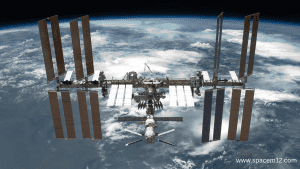
The International Space Station travels at a breathtaking speed of 17,500 miles per hour. That’s roughly 28,000 kilometers per hour for those who prefer metric measurements. In fact, this means the ISS zooms around Earth once every 90 minutes.
Think about that for a moment. While you’re sitting in math class or eating lunch, the ISS completes an entire lap around our planet. Consequently, astronauts aboard the station experience something truly magical: they witness 16 sunrises and 16 sunsets every single day.
How Fast Is That Really?
Let’s break down ISS speed with some comparisons you can actually picture. After all, numbers alone don’t tell the whole story.
Compared to a Commercial Airplane:
A typical passenger jet cruises at about 550 miles per hour. Therefore, the ISS travels almost 32 times faster than the airplane taking your family on vacation. Furthermore, while a plane takes hours to cross the country, the ISS crosses entire continents in just minutes.
Compared to a Bullet Train:
Japan’s famous bullet trains reach speeds up to 200 miles per hour. That’s incredibly fast on the ground. However, the ISS moves 87 times faster than these super-fast trains. Consequently, if the ISS were a train, you could travel from New York to Los Angeles in less than 10 minutes.
Compared to Everyday Life:
When you’re driving in a car at 60 miles per hour, you feel the wind and the motion. But astronauts on the ISS don’t feel like they’re moving at all. Instead, they float peacefully, watching Earth pass below them like a beautiful, moving painting.
Why Does the ISS Need to Travel So Fast?
Here’s where science gets really cool. The ISS doesn’t travel at 17,500 miles per hour because someone decided it would be fun. Rather, this speed is absolutely necessary for survival.
You see, Earth’s gravity is constantly pulling the ISS downward. In addition, without enough speed, the station would simply fall back to Earth like a stone thrown into the air. However, at exactly 17,500 miles per hour, something amazing happens.
The ISS falls toward Earth but also moves forward so quickly that it keeps missing our planet. As a result, it stays in what scientists call “orbit.” Think of it like throwing a ball really, really hard—so hard that by the time it falls down, Earth has curved away beneath it.
What Do Astronauts Experience at This Speed?
Now, let’s talk about what it’s actually like for the people living on the ISS. Surprisingly, astronauts don’t feel the speed at all.
The Floating Life:
When you’re in a car going fast, you feel pushed back in your seat. Similarly, on a roller coaster, your stomach drops as you accelerate. But on the ISS, everything—the station, the astronauts, and even their food—moves at exactly the same speed. Therefore, there’s no sensation of movement.
Instead, astronauts float. They push off walls and glide through the air. Moreover, they can do somersaults in mid-air or hang upside down without feeling dizzy. It’s like living in a dream where gravity doesn’t exist.
The View Changes Constantly:
Even though astronauts don’t feel the speed, they certainly see it. Looking out the window, they watch as Earth’s surface rushes past below them. In addition, they see oceans, mountains, cities, and deserts parade by like scenes in a movie.
Every 45 minutes, the sun rises. Then, 45 minutes later, it sets again. Consequently, their day becomes a beautiful cycle of light and darkness, over and over again.
A Day in the Life: Real Stories from Space
Let me share a touching story that shows how ISS speed affects real astronauts.
The Breakfast That Traveled Around the World:
NASA astronaut Karen Nyberg once described her morning routine in space. She woke up, brushed her teeth (with toothpaste she had to swallow), and prepared breakfast. By the time she finished eating, she had already orbited Earth completely.
“I started my breakfast over Australia,” she explained. “By my last bite, I was looking at the Sahara Desert. Then, I saw the Amazon rainforest during my coffee.”
Furthermore, this incredible journey happened without her feeling any motion at all. She simply floated there, enjoying her meal while traveling faster than a speeding bullet.
Case Study: How Speed Saved a Space Mission
Let’s look at a real example of how understanding ISS speed helped solve a critical problem.
The Emergency Spacewalk of 2019:
In November 2019, astronauts Christina Koch and Jessica Meir had to perform an emergency spacewalk. A crucial power system had failed, and they needed to replace it quickly. However, timing was everything.
The challenge? They had to work outside the station while it zoomed around Earth at 17,500 miles per hour. Additionally, they needed to finish before nightfall—which, remember, happens every 45 minutes in space.
The Solution:
Mission control carefully planned the spacewalk based on the ISS orbit. They calculated exactly when the station would be in sunlight. Moreover, they knew precisely which parts of Earth the astronauts would be floating above.
As Christina and Jessica worked outside, they watched the Pacific Ocean, then Asia, then Europe pass beneath them. In fact, they orbited Earth twice during their seven-hour repair mission. Meanwhile, they stayed perfectly synchronized with the station’s incredible speed.
The Result:
The mission succeeded beautifully. The power system was fixed, and both astronauts returned safely inside. Furthermore, their success showed how astronauts can work effectively at extreme speeds when they understand orbital mechanics.
“Looking down at Earth while fixing the station was surreal,” Christina later said. “We were moving so fast, yet everything felt peaceful and still.”
How Scientists Control This Speed
You might wonder: How do engineers keep the ISS at exactly the right speed? After all, space isn’t empty—tiny particles and atmospheric drag slowly slow down the station.
Reboost Operations:
Every few weeks, the ISS needs a little push to maintain its speed. Russian Progress cargo vehicles or other spacecraft dock with the station and fire their engines. Consequently, they push the ISS a bit faster, compensating for the speed lost to drag.
These “reboost” operations happen so gently that astronauts barely notice them. Nevertheless, without these regular speed boosts, the ISS would gradually spiral back to Earth.
The Science Behind Orbital Velocity
Let’s dive a bit deeper into why 17,500 miles per hour is the magic number. This speed is called “orbital velocity,” and it depends on two main things.
Height Above Earth:
The ISS orbits about 250 miles above Earth’s surface. At this altitude, the pull of gravity is still very strong—about 90% of what you feel on the ground. Therefore, the station needs significant speed to stay in orbit.
Balance of Forces:
Gravity pulls the ISS toward Earth. Meanwhile, the station’s forward speed wants to send it flying off into space. At 17,500 miles per hour, these two forces balance perfectly. As a result, the ISS stays in a stable orbit.
What Would Happen If the ISS Slowed Down?
This is where things get interesting—and a bit scary. If the ISS suddenly slowed down, even by a few hundred miles per hour, serious problems would start immediately.
The Descent Begins:
Without enough speed, the station would begin falling toward Earth. Furthermore, atmospheric drag would increase as it dropped lower. Consequently, the station would heat up from friction with air molecules.
The End Game:
Eventually, the ISS would burn up in Earth’s atmosphere, just like a meteor. In fact, this is exactly how NASA plans to retire the station in 2030—by intentionally slowing it down and letting it fall into the Pacific Ocean.
Speed and Time: A Weird Connection
Here’s something really wild. Because of Einstein’s theory of relativity, time actually moves slightly differently on the ISS than on Earth. However, before you get too excited, the difference is incredibly tiny.
At 17,500 miles per hour, astronauts age about 0.007 seconds less per six-month mission compared to people on Earth. Nevertheless, this tiny difference proves Einstein was right—speed does affect time.
Living Fast, Feeling Slow
The contrast between the ISS’s extreme speed and the peaceful feeling inside creates a unique experience. Astronauts describe it as both thrilling and calming at the same time.
Sleep in Space:
Imagine trying to sleep while traveling at 17,500 miles per hour. Surprisingly, astronauts sleep quite well. They zip themselves into sleeping bags attached to walls. Moreover, the constant, gentle hum of the station’s systems actually helps them relax.
Exercise at Extreme Speeds:
Every day, astronauts exercise for about two hours. They run on treadmills, lift weights, and ride stationary bikes. Meanwhile, they’re simultaneously orbiting Earth at incredible speeds. In addition, this exercise helps keep their muscles and bones strong in the weightless environment.
The Future of High-Speed Space Stations
As we look ahead, the ISS speed teaches us important lessons for future space stations. NASA and other space agencies are already planning what comes next.
New Space Stations:
Several countries and private companies are designing new space stations. These future homes in space might orbit at different heights, which means they’ll travel at different speeds. Furthermore, some might even orbit the Moon or Mars.
Learning from Experience:
Everything we’ve learned about maintaining the ISS at 17,500 miles per hour will help engineers design better systems. Consequently, future astronauts will benefit from decades of experience managing orbital speeds.
You Can See This Speed Yourself
Want to witness ISS speed with your own eyes? You can actually watch the space station fly overhead from your backyard. Moreover, it’s easier than you might think.
How to Spot the ISS:
Visit NASA’s “Spot the Station” website and enter your location. The site will tell you exactly when the ISS will pass over your area. Additionally, the station looks like a bright, fast-moving star in the night sky.
When you see it, remember: that tiny dot of light is traveling at 17,500 miles per hour. Furthermore, there are real people inside, living and working while orbiting our planet every 90 minutes.

Conclusion: Speed That Inspires Wonder
The ISS speed of 17,500 miles per hour represents one of humanity’s greatest achievements. We’ve built a home in space that travels faster than anything you’ll ever experience on Earth. Moreover, we’ve made it safe enough that people can live there for months at a time.
This incredible speed isn’t just about going fast. Instead, it’s about understanding physics, solving problems, and pushing the boundaries of what’s possible. Furthermore, it shows us that with enough knowledge and determination, we can accomplish amazing things.
Every 90 minutes, the ISS completes another lap around Earth. Every orbit brings new discoveries, new experiences, and new hope for humanity’s future in space. Consequently, the next time you look up at the stars, remember: there might be astronauts passing overhead at that very moment, traveling 32 times faster than an airplane but feeling perfectly still.
Ready to Learn More About Space?
If this article sparked your curiosity about space travel and the incredible ISS, you’re not alone. Thousands of students and space enthusiasts discover something new about our orbital laboratory every day.
Explore More Space Science Topics →
Want to track the ISS in real-time? Visit NASA’s Spot the Station to see when it will fly over your location next.
Sources:
- NASA International Space Station Facts and Figures
- European Space Agency ISS Operations
- Orbital Today Space Science Reports

Muzamil
My name is Muzamil, and I am the founder of Spacem12 — a space exploration platform born out of a lifelong fascination with the cosmos. Like many who look up at the night sky and feel something stir, my passion for space began not in a classroom or a laboratory, but simply through curiosity. As a dedicated hobbyist, I found myself spending countless hours reading about rocket launches, distant galaxies, planetary missions, and the extraordinary people who dedicate their lives to exploring the unknown. Over time, I realized that much of the most exciting space content was either too technical for everyday readers or scattered across dozens of different sources. I started Spacem12 to change that — to create a single destination where anyone, regardless of their background, can explore the wonders of the universe in a clear, engaging, and accurate way. Spacem12 is built on the belief that space belongs to everyone. Whether you're a student discovering astronomy for the first time, a curious mind following the latest missions, or a fellow enthusiast who simply can't stop watching rocket launches — this site is for you. The universe is vast. The journey is just beginning.
View all posts