Life on Other Planets: Are We Truly Alone in This Vast Universe?
Life on other planets is no longer just science fiction. It is a serious scientific question. For decades, humans have looked at the night sky and wondered if someone, somewhere, is looking back. Today, with advanced telescopes, space missions, and data from Mars and distant exoplanets, the search for life on other planets has become one of the most exciting fields in astronomy.
But here is the real question.
Are we alone?
Or is life quietly growing somewhere beyond Earth, waiting to be discovered?
Let’s explore what science actually says.
What Do Scientists Mean by “Life on Other Planets”?
When scientists talk about life on other planets, they usually mean microbial life. Not aliens with spaceships. Not movies. Just simple organisms. Bacteria. Microbes. Tiny life forms.
Why?
Because on Earth, life started simple. For billions of years, microbes ruled our planet before complex life appeared. So, when researchers search for extraterrestrial life, they look for similar patterns.
They search for:
- Water
- Oxygen or methane in the atmosphere
- Stable temperatures
- Organic molecules
These are called biosignatures.
Without these signs, life becomes less likely.
Why Water Is the Key to Finding Life
Water is not just important. It is essential.
Every known living organism on Earth depends on liquid water. That is why NASA and other space agencies follow one rule:
“Follow the water.”
Mars once had rivers and lakes. Europa, a moon of Jupiter, hides a massive ocean under its icy surface. Enceladus, a moon of Saturn, sprays water vapor into space.
Scientists believe that if liquid water exists somewhere, life on other planets becomes more possible.
If you are curious about how scientists compare planetary sizes and space structures, you can explore this detailed guide on the size of the ISS:
👉 https://spacem12.com/iss-size/
Understanding scale helps us understand how small Earth is in the cosmic picture.
Exoplanets: Thousands of New Worlds Discovered


In the past 30 years, scientists have discovered over 5,000 exoplanets. These are planets that orbit stars outside our solar system.
Some are gas giants. Some are rocky like Earth.
More importantly, some sit in what is called the habitable zone. This is the region around a star where temperatures allow liquid water to exist.
Telescopes like NASA’s Kepler Space Telescope and the powerful James Webb Space Telescope have helped scientists detect atmospheres, chemical signals, and even possible water vapor on distant worlds.
This is not guesswork. It is measurable science.
And every year, the data becomes stronger.
Mars: Our Closest Hope for Past Life

Mars is cold today. Dry. Dusty.
But it was not always like this.
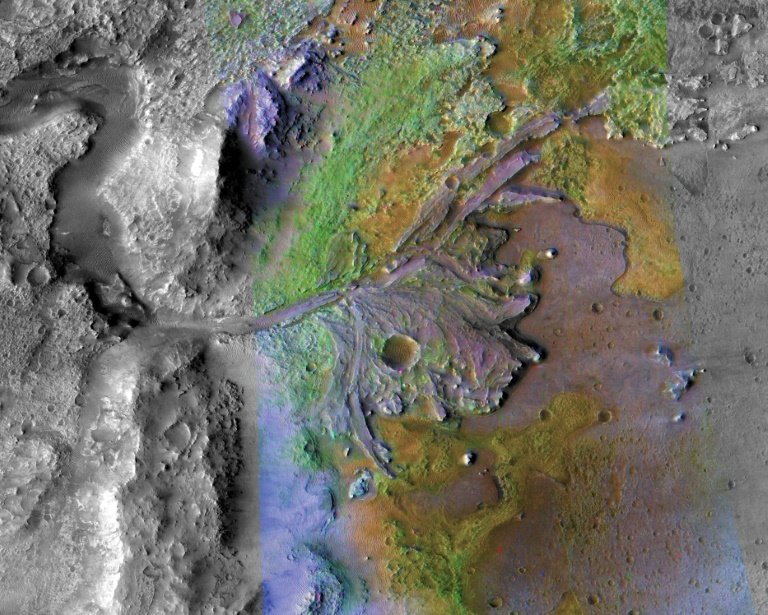
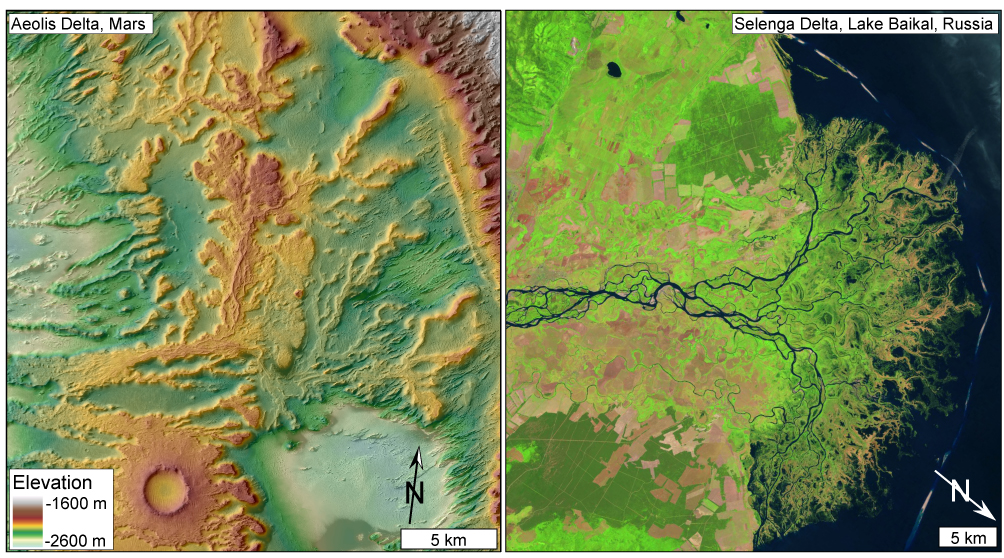
Billions of years ago, Mars had rivers, lakes, and maybe even oceans. The NASA Perseverance Rover is currently studying ancient river deltas to search for fossilized microbial life.
So far, no confirmed life has been found.
However, scientists have discovered organic molecules. These are the building blocks of life.
That alone keeps hope alive.
The Drake Equation: Estimating Intelligent Civilizations
In 1961, astronomer Frank Drake created a formula to estimate how many intelligent civilizations might exist in our galaxy.
It is called the Drake Equation.
The equation considers:
- Rate of star formation
- Number of planets
- Planets in habitable zones
- Probability of life forming
- Probability of intelligent life
The result?
It depends on the assumptions.
Some estimates suggest we could have thousands of civilizations in the Milky Way. Others suggest we might be alone.
This uncertainty is both humbling and exciting.
The Fermi Paradox: If Life Exists, Where Is Everyone?
Physicist Enrico Fermi asked a simple question:
“If extraterrestrials exist, where are they?”
This question became known as the Fermi Paradox.
Possible answers include:
- Civilizations destroy themselves.
- They are too far away.
- We are too early.
- We are not technologically advanced enough to detect them.
Or perhaps…
They are microbial, not intelligent.
That possibility changes everything.
What Competitors Often Miss About Life on Other Planets
Most articles focus only on “aliens.” They chase excitement.
However, what many fail to explain is this:
Life on other planets is not just about discovery. It is about understanding Earth.
When we study Mars, Europa, or distant exoplanets, we learn how rare — or common — life truly is. That helps us understand climate, evolution, and survival here at home.
Moreover, many blogs ignore recent atmospheric detection techniques. The James Webb Space Telescope can now analyze exoplanet atmospheres in detail. That changes the conversation completely.
The search is no longer theoretical. It is observational.
Could Intelligent Life Be Watching Us?
This is where curiosity turns personal.
If there is intelligent life out there, it may be millions of years ahead of us. Or behind us.
Radio signals from Earth have only traveled about 100 light-years. That is a tiny bubble in our galaxy.
The Milky Way alone contains over 100 billion stars.
Statistically, it feels unlikely that Earth is the only place where life evolved.
Yet we still have no proof.
And that silence makes the mystery deeper.
How Close Are We to Discovering Life?
The honest answer?
Closer than ever.
Scientists are developing:
- Stronger space telescopes
- Mars sample-return missions
- Ice-drilling missions to Europa
- Atmospheric chemical analysis tools
According to NASA’s Astrobiology program (source: https://astrobiology.nasa.gov/), the next 10–20 years could be critical in detecting biosignatures beyond Earth.
We may not find little green beings.
But we might find microbial evidence.
And that would change human history forever.
FAQs About Life on Other Planets
1. Has life on other planets been confirmed?
No. As of now, there is no confirmed evidence of life beyond Earth. However, strong indicators like organic molecules and water exist on several worlds.
2. Which planet is most likely to support life?
Mars is a candidate for past life. Europa and Enceladus may support present microbial life under their oceans. Some exoplanets in habitable zones are also strong candidates.
3. What is a biosignature?
A biosignature is a chemical or physical sign that suggests life. Examples include oxygen, methane, and organic molecules in a planet’s atmosphere.
4. Why haven’t we detected aliens yet?
Distance is the biggest challenge. Space is extremely vast. Signals weaken over light-years, and advanced civilizations may use technologies we do not yet understand.
5. Could life exist without water?
Possibly. Some scientists speculate about alternative biochemistries. However, all known life depends on water, so it remains our main search focus.

Conclusion: The Search Continues
Life on other planets is not a fantasy. It is a scientific mission. Every rover sent to Mars, every telescope launched into space, every new exoplanet discovered brings us closer to an answer.
Maybe we are alone.
Maybe we are not.
Either way, the search itself expands human knowledge. It forces us to look outward — and inward. It reminds us how precious Earth is. How rare life might be.
And until we find proof, one truth remains clear:
The universe is vast.
The question is open.
And the story is still being written.

Muzamil
My name is Muzamil, and I am the founder of Spacem12 — a space exploration platform born out of a lifelong fascination with the cosmos. Like many who look up at the night sky and feel something stir, my passion for space began not in a classroom or a laboratory, but simply through curiosity. As a dedicated hobbyist, I found myself spending countless hours reading about rocket launches, distant galaxies, planetary missions, and the extraordinary people who dedicate their lives to exploring the unknown. Over time, I realized that much of the most exciting space content was either too technical for everyday readers or scattered across dozens of different sources. I started Spacem12 to change that — to create a single destination where anyone, regardless of their background, can explore the wonders of the universe in a clear, engaging, and accurate way. Spacem12 is built on the belief that space belongs to everyone. Whether you're a student discovering astronomy for the first time, a curious mind following the latest missions, or a fellow enthusiast who simply can't stop watching rocket launches — this site is for you. The universe is vast. The journey is just beginning.
View all posts