Mars Rain: Did It Ever Rain on the Red Planet?
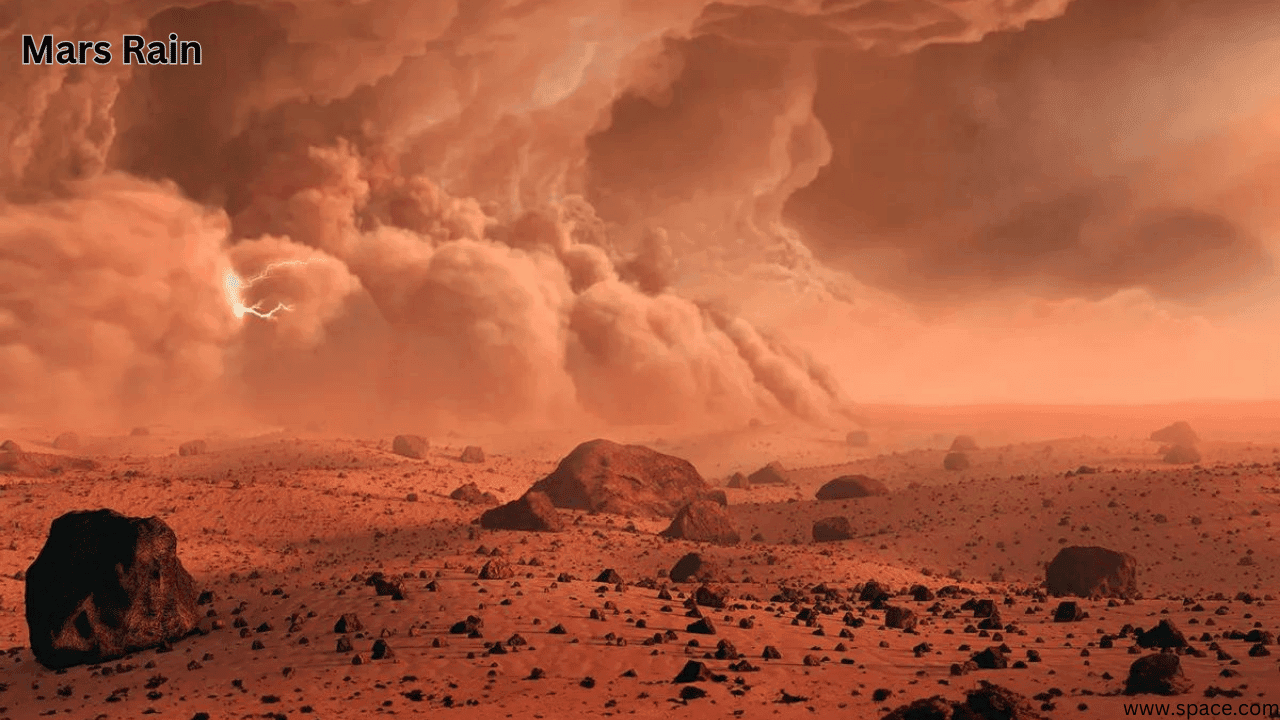
Mars rain sounds impossible. Today, Mars is dry, cold, and dusty. The sky is thin. The air is weak. Liquid water cannot survive on the surface for long. Yet scientists believe that billions of years ago, Mars rain may have fallen from thick clouds onto valleys, rivers, and even lakes.
This is not science fiction.
It is real planetary science.
And if rain once touched the surface of Mars, it changes everything we know about the planet — and about life beyond Earth.
What Is Mars Rain?
Mars rain refers to the idea that liquid water once fell from the Martian sky. Not snow. Not ice crystals. But actual rain — water droplets forming in clouds and falling onto the surface.
Today, Mars does not have liquid rain. Its atmosphere is too thin. Temperatures are too low. However, ancient Mars was very different.
Scientists believe early Mars had:
- A thicker atmosphere
- Warmer temperatures
- Flowing rivers
- Large lakes
- Possibly shallow oceans
If those conditions existed, rain was not just possible. It was likely.
Evidence That Mars Once Had Rain


When scientists study Mars, they do not guess. They look at surface features. And those features tell a story.
1. Ancient River Valleys
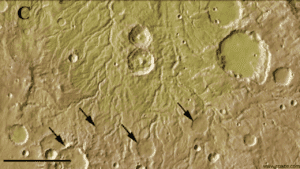
Mars has long, winding channels. These look like riverbeds on Earth. They are too detailed to be formed by ice alone. Flowing water carved them.
2. Dried River Deltas
Large fan-shaped formations exist where water once entered lakes. These structures form from steady rainfall and river flow over time.
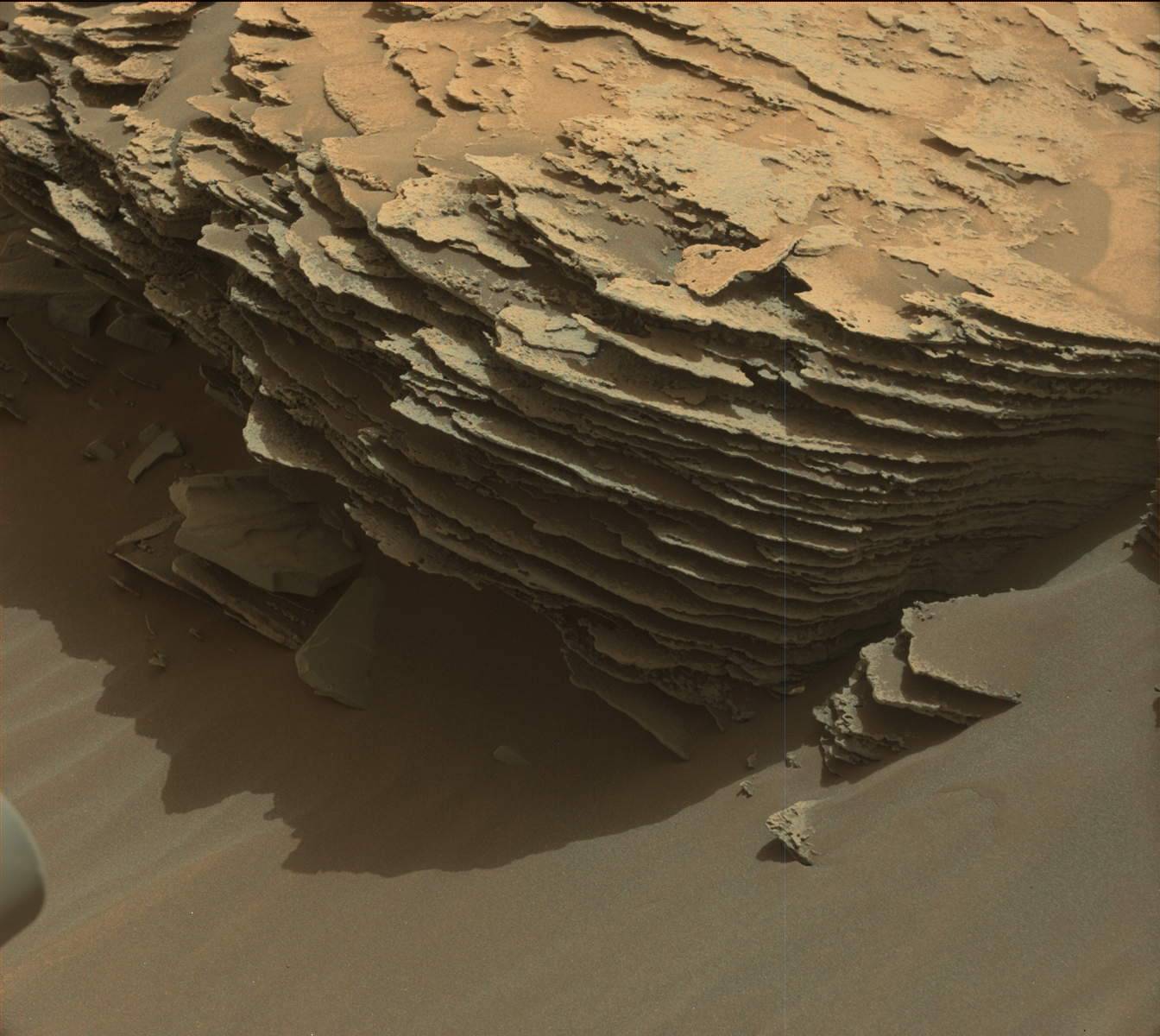
3. Sedimentary Rock Layers
Layered rocks on Mars suggest long-term water activity. On Earth, such rocks form in lakes or oceans where water settles sediments slowly.
According to NASA, these formations strongly suggest that Mars had a water cycle in the past.
And a water cycle usually includes rain.
Source: https://mars.nasa.gov/
How the Water Cycle May Have Worked on Mars
To understand Mars rain, we must understand the water cycle.
On Earth, the cycle works like this:
- Water evaporates
- Clouds form
- Rain falls
- Rivers flow
- Water collects again
Scientists believe early Mars may have had a similar cycle.
Volcanic activity may have released gases. These gases thickened the atmosphere. The thicker atmosphere trapped heat. Warmer temperatures allowed liquid water to exist.
Clouds formed.
Rain fell.
Rivers flowed across the surface.
Over time, Mars lost its magnetic field. Solar winds stripped away the atmosphere. The planet cooled. Water disappeared.
The rain stopped.
Was Mars Rain Heavy or Light?
This is where competitors often stop. They say, “Mars had water,” and move on.
But the real question is deeper.
Was Mars rain steady and gentle? Or violent and storm-like?
New climate models suggest that early Mars may have experienced seasonal rainfall. Some areas may have had brief but intense rainstorms. Other regions may have had light, steady rain over long periods.
This matters.
Because steady rainfall increases the chances of stable lakes. Stable lakes increase the chances of microbial life.
And that leads to the next big question.
Could Mars Rain Have Supported Life?

If Mars rain existed, it means Mars once had:
- Liquid water
- Warmer temperatures
- Chemical activity
These are key ingredients for life.
The Perseverance Rover is currently exploring Jezero Crater. This crater once held a lake fed by rivers. Scientists are searching for biosignatures — signs of ancient microbial life.
If rain fed that lake, it may have created a stable environment for life to begin.
So far, no confirmed life has been found.
But organic molecules have been detected.
That keeps hope alive.
Why Did Mars Lose Its Rain?
Earth and Mars were once similar.
So why did Earth keep its rain while Mars lost it?
The answer may lie in planetary size.
Mars is smaller than Earth. Smaller planets cool faster. When Mars cooled, its core slowed down. Without a strong magnetic field, solar radiation stripped away the atmosphere.
Once the atmosphere thinned:
- Pressure dropped
- Temperatures fell
- Liquid water became unstable
Rain could no longer form.
Mars became the dry world we see today.
Does It Rain on Mars Today?
Not in the way we think of rain.
Today, Mars experiences:
- Dust storms
- Carbon dioxide snow near the poles
- Thin ice clouds
But liquid rain? No.
The surface pressure is less than 1% of Earth’s. Water would boil or freeze almost instantly.
However, scientists are still studying rare weather events. The Martian climate is complex and continues to surprise researchers.
How Studying Mars Rain Helps Us on Earth
Mars rain is not just about Mars.
It helps us understand:
- Climate change
- Atmospheric loss
- Planetary evolution
- Water sustainability
If a planet can go from rivers and rainfall to dry desert, it reminds us how fragile climates can be.
Earth is stable now. But stability depends on balance.
Studying Mars gives us a warning — and insight.
A Surprising Comparison: Life in Extreme Conditions
On Earth, some life forms survive in extreme environments. Deep oceans. Freezing waters. Dark ecosystems.
For example, the Greenland shark survives in icy Arctic depths for hundreds of years. You can explore this fascinating creature here:
👉 https://spacem12.com/greenland-shark/
Life adapts.
If Mars once had rain and water, simple life could have adapted too.
That possibility keeps scientists searching.
What Scientists Are Doing Next
Future missions aim to:
- Bring Mars rock samples back to Earth
- Study ancient lakebeds more closely
- Analyze mineral formations shaped by water
- Improve climate simulations of early Mars
Each mission adds a piece to the puzzle.
And the puzzle is simple but powerful:
Did Mars rain long enough to allow life to begin?
FAQs About Mars Rain
1. Did it really rain on Mars?
Scientists believe it likely rained on Mars billions of years ago when the planet had a thicker atmosphere and warmer climate.
2. What evidence supports Mars rain?
River valleys, sedimentary rocks, and dried lakebeds strongly suggest long-term water flow, possibly fed by rainfall.
3. Why doesn’t it rain on Mars now?
Mars lost most of its atmosphere due to solar radiation. Without enough air pressure, liquid rain cannot form.
4. Could rain return to Mars?
Not naturally under current conditions. Terraforming ideas exist, but they are theoretical and far from practical reality.
5. How does Mars rain relate to life?
Rain supports stable bodies of water. Stable water increases the chances of microbial life forming and surviving.
Conclusion: A Planet That Once Felt the Sky
Mars rain may have fallen softly onto valleys that are now silent. It may have filled lakes that are now empty. It may have shaped landscapes we are still exploring.
Today, Mars is cold and dry.
But its surface remembers water.
And if rain once touched the Red Planet, then Mars was not always a desert. It was once active. Dynamic. Possibly alive.
The search continues. Because understanding Mars rain is not just about the past. It is about whether life ever had a second home in our solar system.

Muzamil
My name is Muzamil, and I am the founder of Spacem12 — a space exploration platform born out of a lifelong fascination with the cosmos. Like many who look up at the night sky and feel something stir, my passion for space began not in a classroom or a laboratory, but simply through curiosity. As a dedicated hobbyist, I found myself spending countless hours reading about rocket launches, distant galaxies, planetary missions, and the extraordinary people who dedicate their lives to exploring the unknown. Over time, I realized that much of the most exciting space content was either too technical for everyday readers or scattered across dozens of different sources. I started Spacem12 to change that — to create a single destination where anyone, regardless of their background, can explore the wonders of the universe in a clear, engaging, and accurate way. Spacem12 is built on the belief that space belongs to everyone. Whether you're a student discovering astronomy for the first time, a curious mind following the latest missions, or a fellow enthusiast who simply can't stop watching rocket launches — this site is for you. The universe is vast. The journey is just beginning.
View all posts