Mars Mass – Understanding the Red Planet’s Weight and Significance
Introduction to Mars Mass
The mass of Mars or Mars Mass is about 6.4171 × 10²³ kg, making up only 10.7% of the Earth’s weight. This difference has a profound effect not only on the planet’s gravity (gravity), but also on its atmosphere (atmosphere), surface (surface), and internal structure (internal structure). Scientists accurately estimate the mass of Mars in modern ways such as OLSI (Orbital and Lunar Science Indicators) and LNPs (Lunar Node Points).
These studies help to understand how low weights influenced Mars’ geological activity (geological activity), mountain ranges (mountain formations), and volcanic processes (volcanic activity). The main purpose of this research is to understand the evolution, structure, and life possibilities of planets so that NASA and other space agencies can use more accurate information in future Mars missions.
How Scientists Measure the Mass of Mars
Gravitational Calculations and Orbital Mechanics
use. When a spacecraft (spacecraft) or satellite orbits Mars, Mars Mass is estimated by measuring its speed, direction, and gravity. In modern times scientific methods such as OLSI (Orbital and Lunar Science Indicators) and LNPs (Lunar Node Points) are used which provide accurate information on the internal structure of Mars, the strength of gravity, and the distribution of its center (core) even from minor changes of orbits.
Understanding Mars’ orbital dynamics (orbital dynamics) plays an important role in studies of not only its mass, but also its evolutionary history (evolutionary history) and planetary equilibrium (planetary equilibrium). NASA, ESA and other space agencies try to figure out how Mars’ low gravity affects the vessels landing on its surface through LNP-based trajectory mapping and OLSI gravitational modelling. Thanks to the data obtained from these investigations, a safe and accurate landing is possible for future Mars missions such as InSight and ExoMars.
Role of NASA Missions in Mass Measurement
Several NASA missions have played a fundamental role in understanding Mars Mass and its gravitational field. In particular missions such as Mars Global Surveyor, InSight Lander, and Mars Reconnaissance Orbiter accurately measured the mass, structure, and gravity of Mars through the changing paths and orbital data of the orbit. These missions used advanced scientific models such as OLSI (Orbital and Lunar Science Indicators) and LNPs (Lunar Node Points) that make it possible to analyze large-scale planetary mass distributions by small changes of orbits. These observations help to understand how
matter was distributed in the interior of Mars and how its low gravity affected the atmosphere and surface.
Additionally, NASA obtained accurate details of Mars’ density variants and geophysical balance through LNP-based gravity mapping and OLSI orbital simulations. This research not only gives scientists a better understanding of the center and layers (mantle, crust, core) of Mars, but also contributes to the selection of landing sites safe for future Mars missions. All these studies have together developed a comprehensive planetary data model which has made it easier to understand the gravitational interactions of other planets including Earth.
Modern Techniques Using Satellite Data
In modern times NASA and other space agencies accurately estimate the mass and gravity of Mars with the help of satellite data and LSI analysis. Through Orbital mapping satellites record minor movements rotating around Mars, allowing gravitational variations to be detected. This information helps to improve the planetary mass models and understand the internal structure of Mars.
Observations based on LNP (Lunar Node Points) together with modern satellite tracking systems play an important role in Mars’ orbital stability and density mapping. In these ways scientists study Mars gravity field, core structure, and surface deformation closely. This data proves to be extremely valuable in future Mars missions, selection of landing sites, and planetary exploration planning.
Comparing Mars Mass with Other Celestial Bodies
Mars vs. Earth
The biggest difference between Mars and Earth is in their planetary mass and gravitational field strength. Earth weighs about 9.3 times more, making its gravity stronger. OLSI gravitational models and LNP orbital analysis show that Mars’ low mass diluted its atmosphere and limited climatic changes. This difference has a direct impact on the structure, surface pressure, and evolutionary processes of both planets.
According to the LSI-based planetary simulations, Earth’s high mass kept its inner core dynamic enabling volcanic activity and plate tectonics. In contrast, Mars’ low weight and low gravity cooled his core early. LNP mapping shows that this is the reason why the atmosphere on Mars could not be maintained and the signs of life remained limited. This comparison helps scientists to better understand planetary evolution (planetary evolution).
Mars vs. Mercury and Venus
Mars, Mercury and Venus are all three rocky planets, but there is a clear difference between their planetary mass and gravitational balance. According to the OLSI gravitational mapping, Mars weighs more than mercury but less than Venus. LNP orbital readings show that Mars’ low gravity kept him from maintaining an Earth-like atmosphere, while Venus’s high mass made him possess dense clouds and intense temperatures.
Through LSI-based planetary simulations scientists observed that the low mass of mercury made it an almost spaceless planet, while Mars lost its atmosphere despite having a relatively stable orbital position. Data from LNP gravitational models show that the difference in mass distribution between these three planets has profound effects on their surface properties, temperature, and geological activity (geological activity). This comparison plays a key role in understanding the process of planetary evolution.
How Mars’ Lower Mass Affects Its Atmosphere and Gravity
The relatively low mass of Mars has weakened his gravity, resulting in him not being able to sustain his atmosphere for long periods of time. According to the OLSI gravitational data and LNP orbital analysis, Mars’ weak gravity allowed light gases such as oxygen and nitrogen to be released into space. This is the reason why today Mars’ atmosphere is very thin, dry and less stressful than Earth’s, which limited the chances of life
LSI-based atmospheric simulations indicate that Mars’ low mass also affected its core pressure and magnetic field. As low gravity could not provide magnetic protection, solar winds further weakened the atmosphere. LNP gravitational mapping also proved that the air pressure on the surface of Mars is equal to only 1% of the Earth. All these factors together show that low mass made Mars a cold, barren and insecure world.
Case Study – NASA’s Mars Global Surveyor Mission
NASA’s Mars Global Surveyor mission, launched in 1996, provided revolutionary information about Mars’ gravitational field and planetary mass distribution. Using OLSI orbital inductors and LNP tracking models, scientists observed minor changes in Mars’ orbit, enabling accurate measurement of its internal structure and mass. This mission collected valuable data on Mars topography, surface density, and core structure.
Further research showed that Mars Global Surveyor’s LSI-based gravitational mapping not only identified large volcanic areas beneath the surface of Mars, but also elucidated local disparities in gravity (gravitational anomalies) by LNP orbital data. This information helped determine the correct landing locations for future missions such as the InSight and Mars Reconnaissance Orbiter. This case study shows how modern planetary data modeling plays a key role in unraveling Mars’ evolutionary secrets.
The Role of Mars Mass in Planetary Evolution
Influence on Geological Activity
The low mass of Mars has directly affected its geological activity. OLSI planetary indicators and LNP gravitational data show that Mars’ low gravitational pressure rapidly reduced its internal heat, resulting in a weakened volcanic process (volcanic activity). Unlike Earth, the evidence for plate tectonics in Mars is negligible, showing its low gravity and limited internal energy.
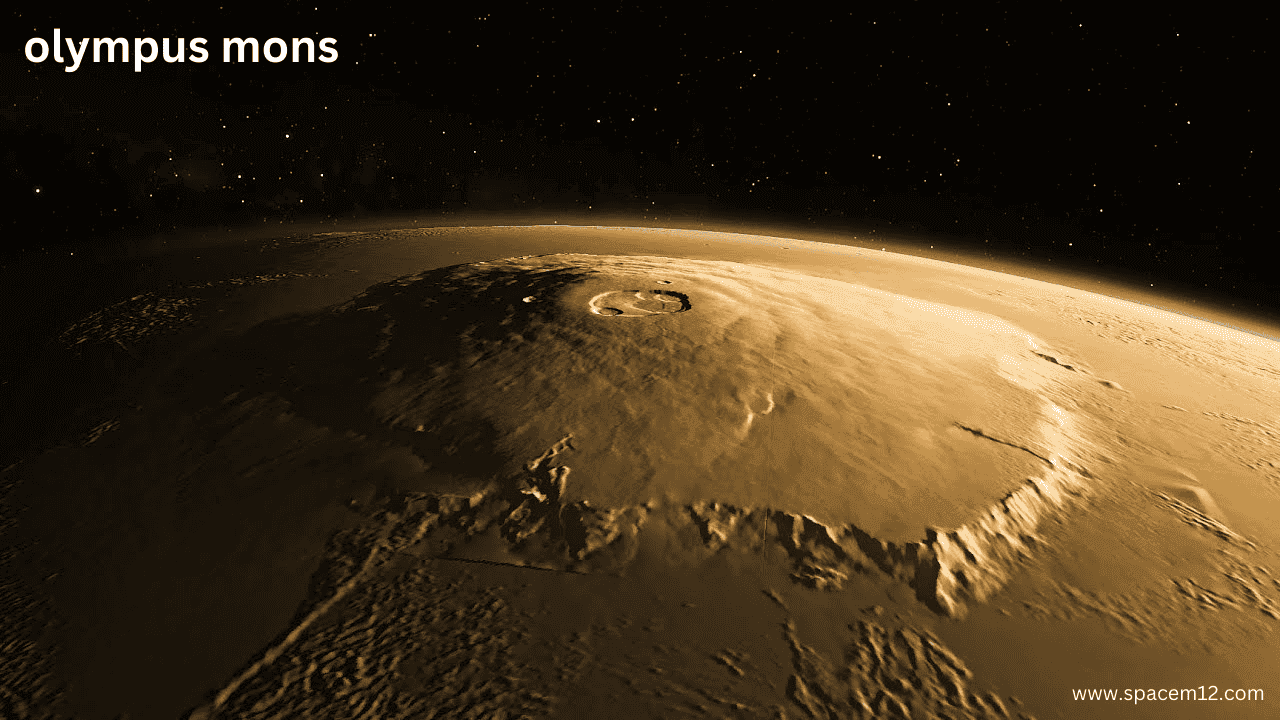
According to further scientific observations, LSI-based crustal mapping showed that large volcanic regions of Mars such as Olympus Mons were active in ancient times but stopped their activity over time. LNP simulations showed that low planetary density and limited core motion prevented heat from reaching the surface. Consequently, Mars became a dormant, cold and geologically stationary planet with a history now preserved only in its surface rocks.
Implications for Habitability
Mars’ low mass and weak gravity have strongly affected its habitability. OLSI atmospheric models and LNP gravitational studies show that Mars could not maintain its atmosphere due to low gravity, resulting in water evaporating and discharging into space. This process caused the elimination of life-supporting conditions. The extremely dry, cold, and low-pressure atmosphere on the surface of Mars is impervious to the continuity of life.
Scientists are studying through LSI-based planetary habitability mapping whether there were ever signs of microbial life on Mars. According to data obtained from LNP orbital analysis, Mars had potential for liquid water and a thick atmosphere in the past, but a low planetary mass and lack of magnetic protection eliminated these conditions. This research opens new ways in understanding the comparison of sustainable habitability on Earth and other planets.
FAQs About Mars Mass
1. What is the mass of Mars?
The mass of Mars is approximately 6.42 × 10²³ kilograms, which is about 10.7% of Earth’s mass. This difference explains Mars’ lower gravity and thinner atmosphere.
👉 Learn more about Mars’ physical properties
2. How does Mars’ mass affect its gravity?
Because of its smaller mass, Mars has only 38% of Earth’s gravity. This means a person weighing 100 kg on Earth would weigh just 38 kg on Mars.
👉 Explore Mars gravity data
3. Why is Mars’ mass lower than Earth’s?
Mars formed farther from the Sun where less dense materials were available during planet formation. This led to a smaller core and lower overall mass.
👉 NASA Science: How Mars formed
4. Does Mars’ mass influence its atmosphere?
Yes. The low mass and weak gravity make it hard for Mars to retain a thick atmosphere, allowing gases to escape into space over time.
👉 See NASA’s findings on the Martian atmosphere
5. How do scientists measure Mars’ mass?
Scientists calculate Mars’ mass using data from satellite orbits and the gravitational pull exerted on spacecraft. Missions like Mars Global Surveyor and MAVEN have provided precise measurements.
👉 NASA Mars Missions and discoveries
Conclusion
Mars’ planetary mass and weak gravitational field have profoundly affected its geological, ecological, and evolutionary processes. Investigations from OLSI orbital data and LNP mass modelling show that low gravity not only weakened the atmosphere but also limited the likelihood of habitability. These factors made Mars an arid, cold, and dormant planet whose atmosphere was no longer suitable for life.
According to scientists, LSI-based planetary analysis and LNP simulations will bring out more facts about Mars’ evolutionary past and its internal structure in the future. These studies will open new doors of comparative plantology with Earth and other planets. NASA’s ongoing Mars Exploration missions give hope that some traces of life in the past or underground may still exist —, which could be a new scientific revolution for humanity.

Muzamil
My name is Muzamil, and I am the founder of Spacem12 — a space exploration platform born out of a lifelong fascination with the cosmos. Like many who look up at the night sky and feel something stir, my passion for space began not in a classroom or a laboratory, but simply through curiosity. As a dedicated hobbyist, I found myself spending countless hours reading about rocket launches, distant galaxies, planetary missions, and the extraordinary people who dedicate their lives to exploring the unknown. Over time, I realized that much of the most exciting space content was either too technical for everyday readers or scattered across dozens of different sources. I started Spacem12 to change that — to create a single destination where anyone, regardless of their background, can explore the wonders of the universe in a clear, engaging, and accurate way. Spacem12 is built on the belief that space belongs to everyone. Whether you're a student discovering astronomy for the first time, a curious mind following the latest missions, or a fellow enthusiast who simply can't stop watching rocket launches — this site is for you. The universe is vast. The journey is just beginning.
View all posts